5 Must-Know Tips for an easy day trip to Cayo Jutías
There’s a good chance this post contains affiliate links. This means that if you purchase anything through one of our links, we’ll receive a small fee (it won’t cost you anything, promise!). As an Amazon Affiliate, we earn from qualifying purchases. If you would like to learn more about our affiliate partners, click here for our disclaimer.
On our last day in Viñales, we decided to do a day trip to the remote beach of Cayo Jutías.
Lonely Planet describes this island as the most discovered “undiscovered” beach in the Pinar del Río region, and that’s pretty spot on.
Connected to the mainland only by a long, narrow road, Cayo Jutías feels like the most secluded place you’ll see on your trip to Cuba.
But here’s the thing: it’s not difficult to visit Playa Jutías. It’s just… you know, Cuba.
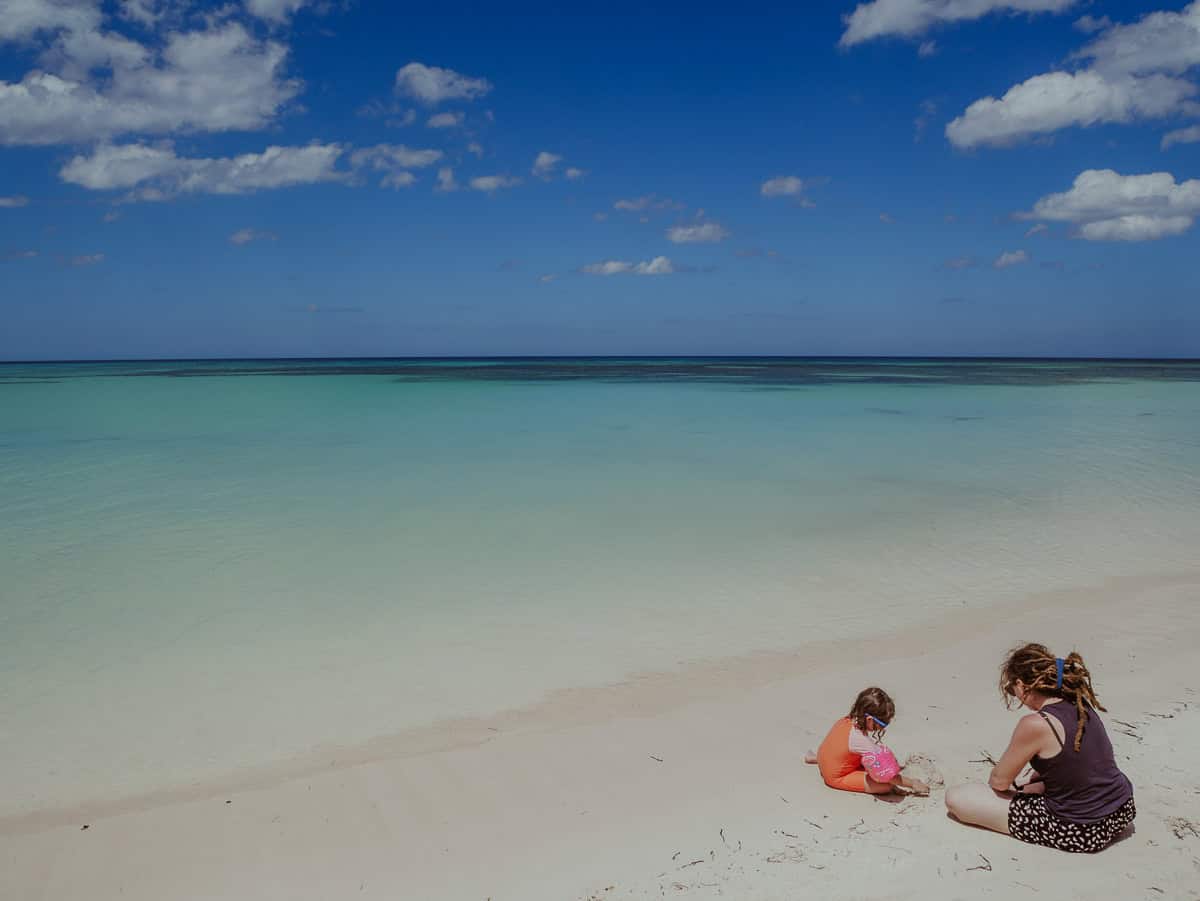
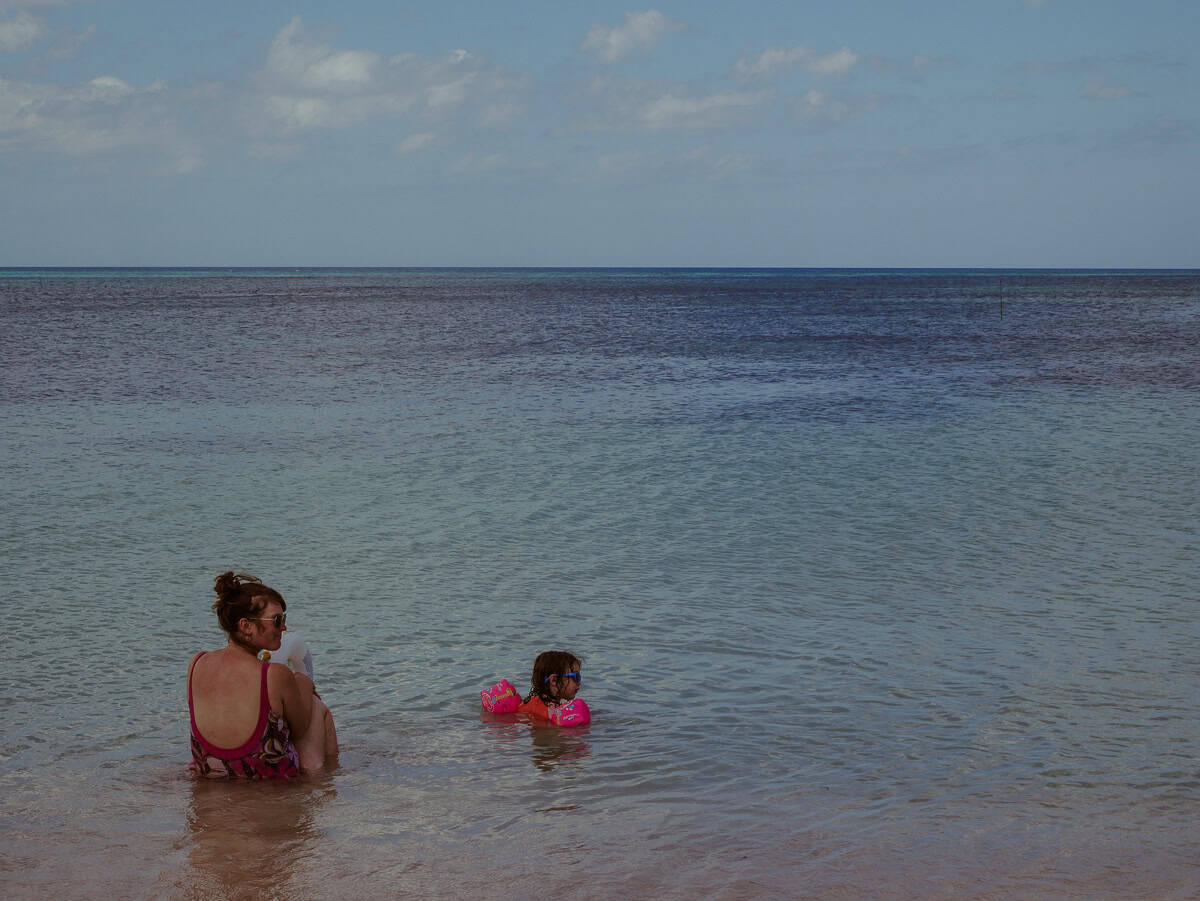
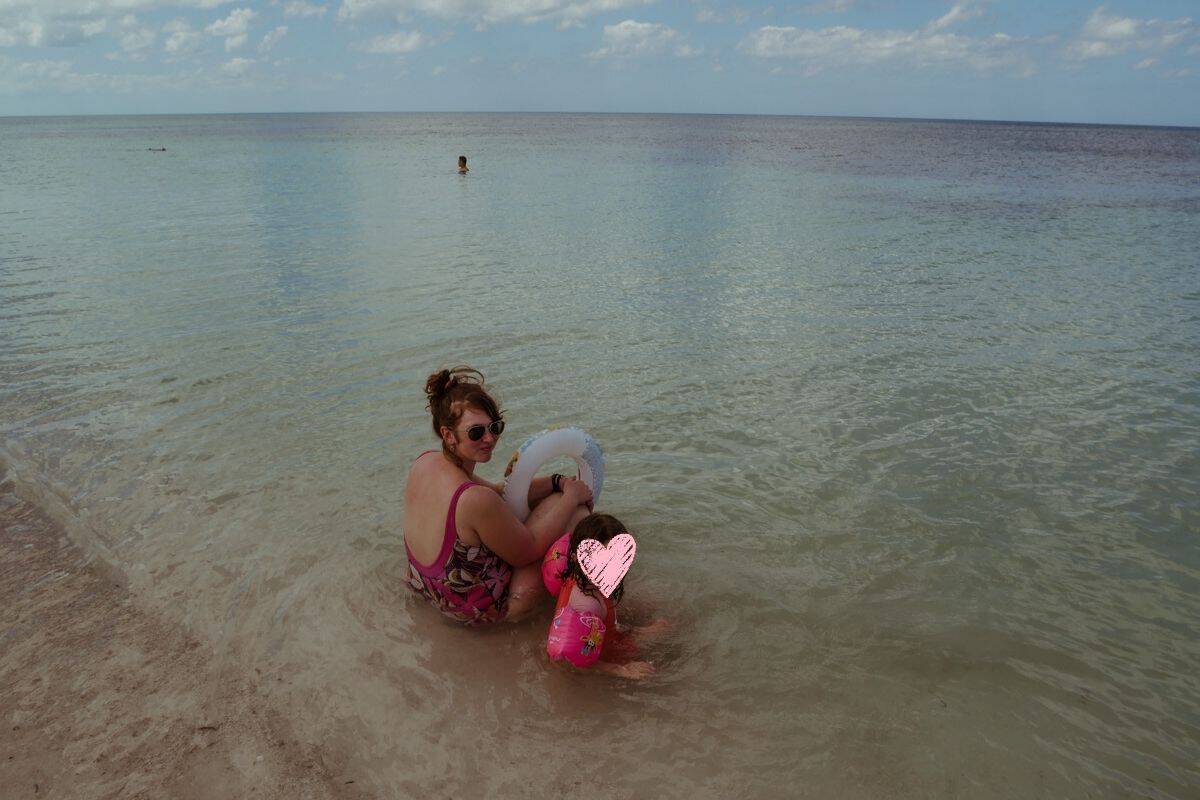
The drive is long and bumpy. The facilities are basic. The restaurant situation is… interesting. And yet, the beach itself is absolutely stunning: soft white sand and shallow turquoise water perfect for little ones to play in.
If you’re travelling with neurodivergent kids, or anyone who does better with predictability and clear expectations, details matter. So instead of just telling you that Cayo Jutías is beautiful (it is), this guide walks you through exactly what to expect on a day trip from Viñales to Cayo Jutías.
Cayo Jutías at a glance
📍 Where: 55 km northwest of Viñales (1,5-2hrs)
⌚ Time: 4-6 hours + driving time (= full day trip)
🚍 How: By shared or private transfer or rental car.
🏛️ Tour recommendation: Book and pay your shared transfer from Viñales to Cayo Jutías here or ask your casa particular host.
First things first: Where is Cayo Jutías?
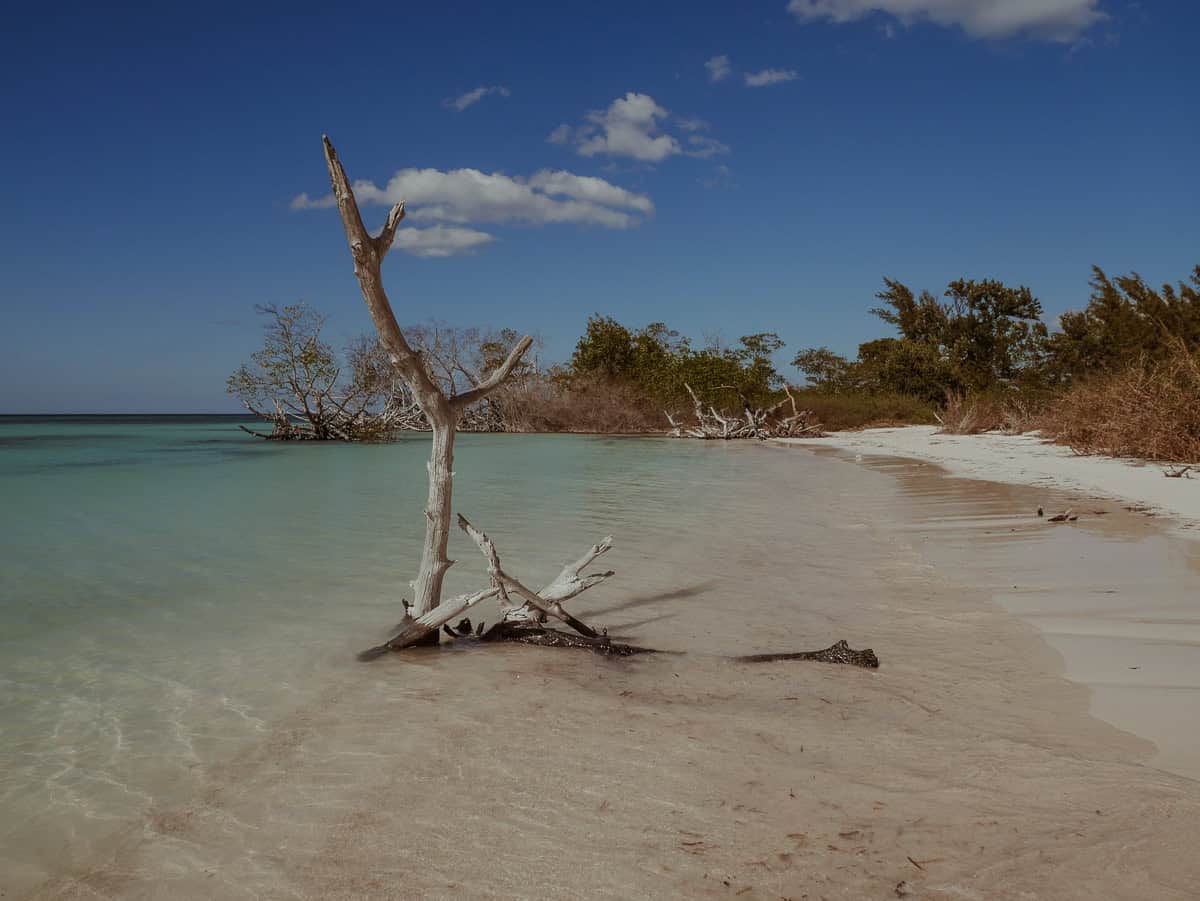
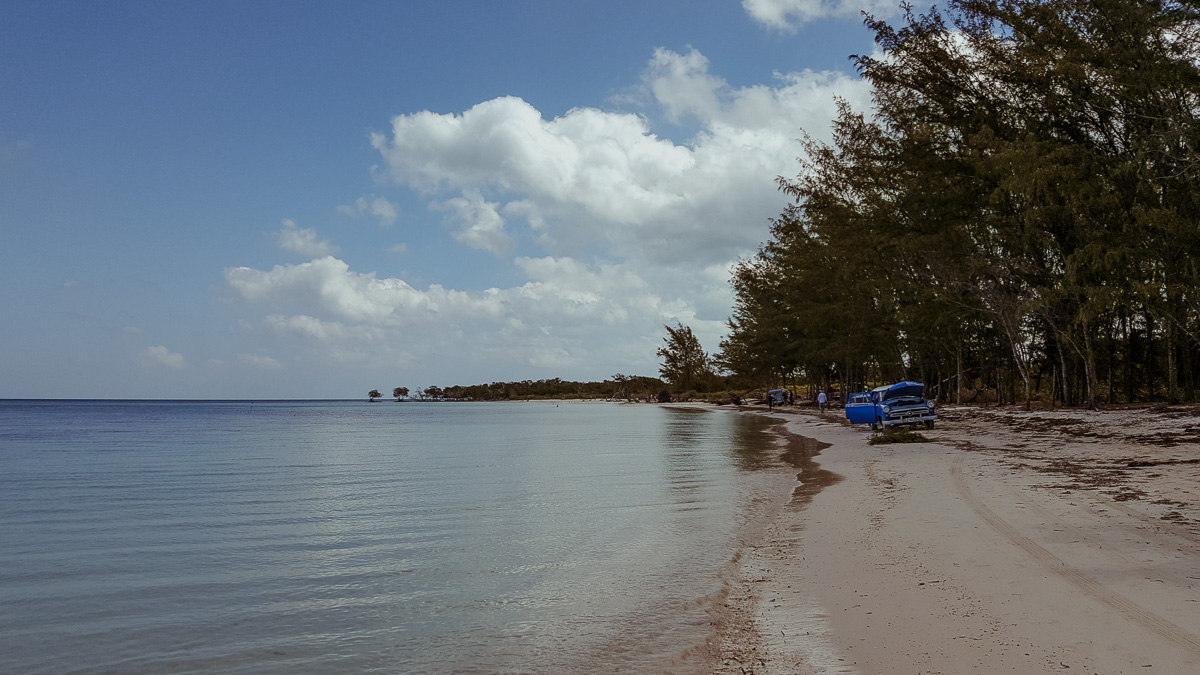
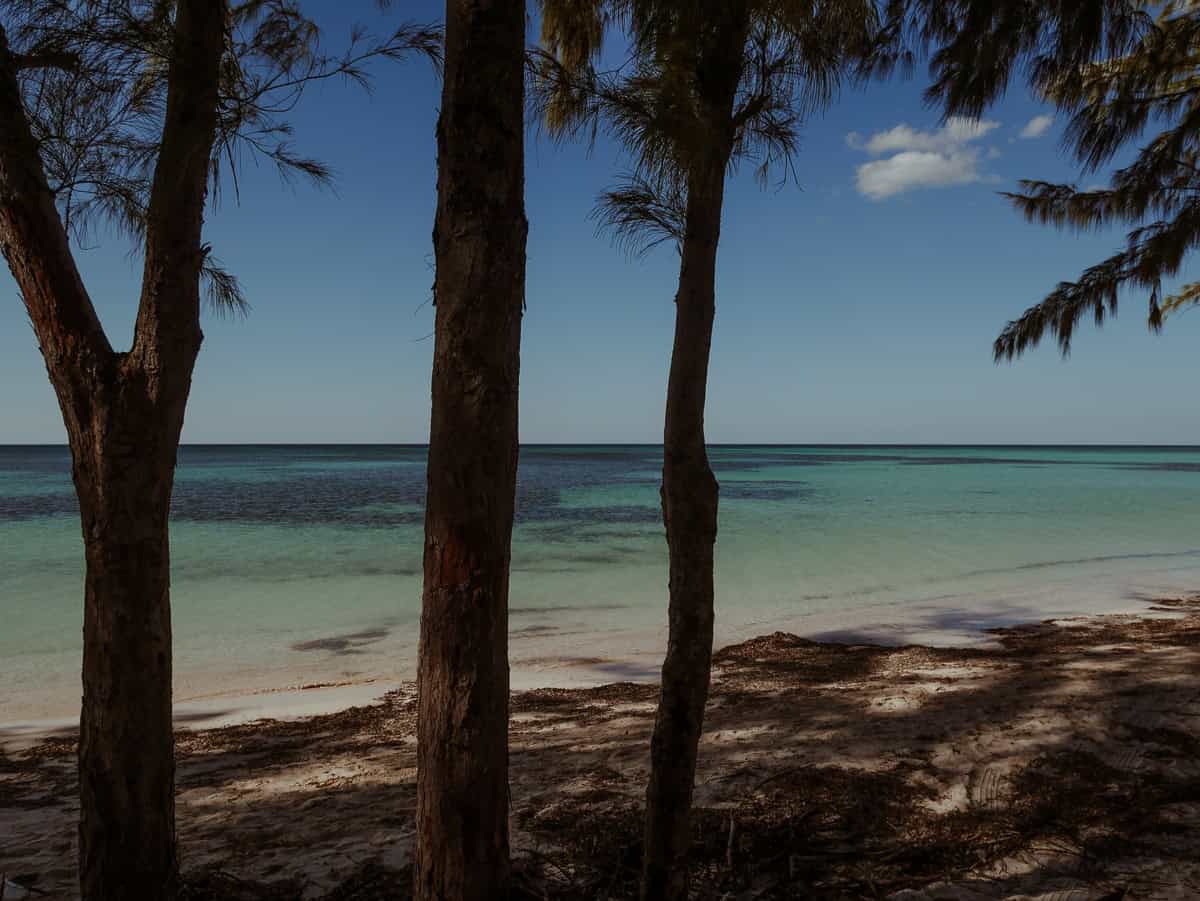
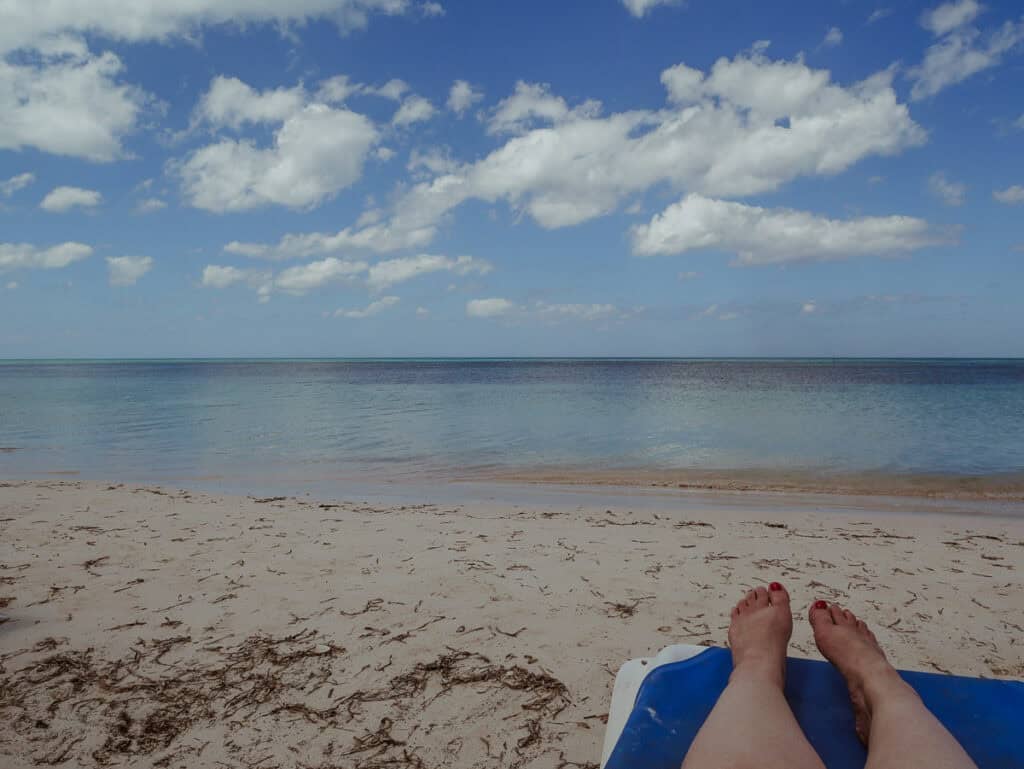
Cayo Jutías is a 3km long stretch of soft white sand and crystal clear turquoise waters. It’s named after large tree rats (jutías/hutias) that are common in the area (and other parts of the Caribbean).
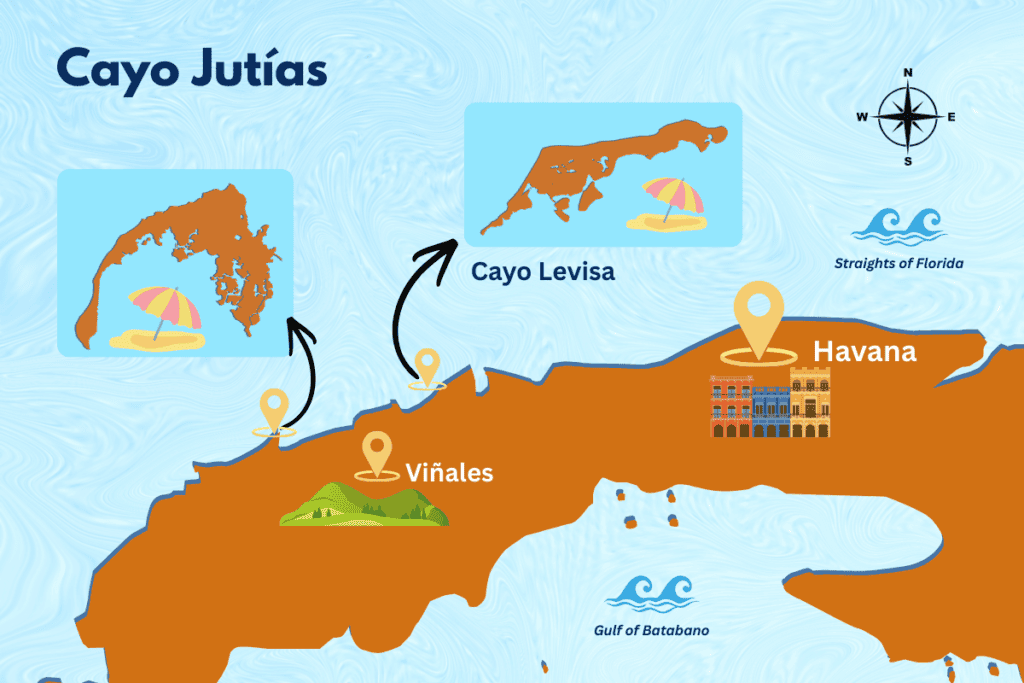
As you can see on the map, Cayo Jutías is situated in a remote area in the Pinar del Río province, with the closest village being Santa Lucía. However, most visitors stay in Viñales and make the trip as a day tour.
Cayo can be translated as Cay (also known as Caye or Key). It’s a small sandy island with a low elevation that forms on top of a coral reef. They occur in tropical environments all around the world. Both Cayo Jutías and Playa Jutías are used.
Tip 1: Plan for the Drive (It’s Longer and Rougher Than You Think)
Cayo Jutías is located about 55 kilometres away from the popular hillside town of Viñales, but it will take you 1.5 to 2 hours to get there due to the bad road conditions.
You’d think that 55 km will cost you about an hour or so (even if you’re already calculating the usual Cuban delays and road conditions) but guess what: add another hour or even a bit more to that.
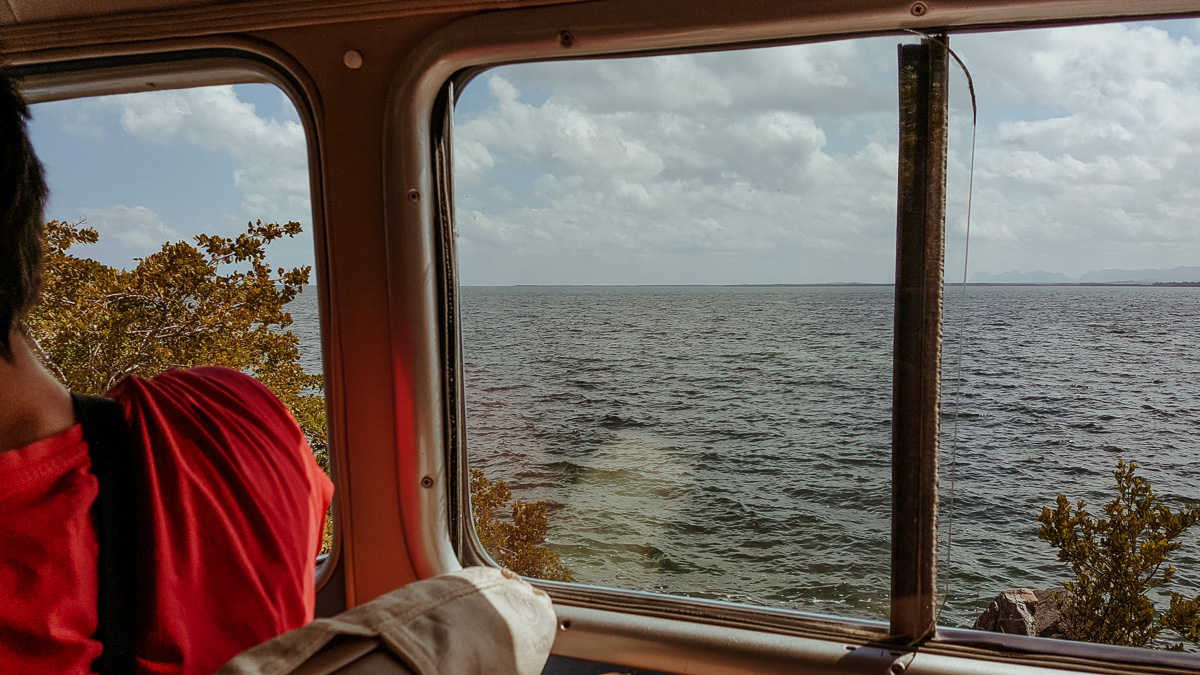
The final stretch crosses a long, narrow causeway (pedraplén) built over the sea, which makes it feel even more remote once you approach. But, especially that last part, once you take the junction towards Cayo Jutías, is in VERY bad shape.
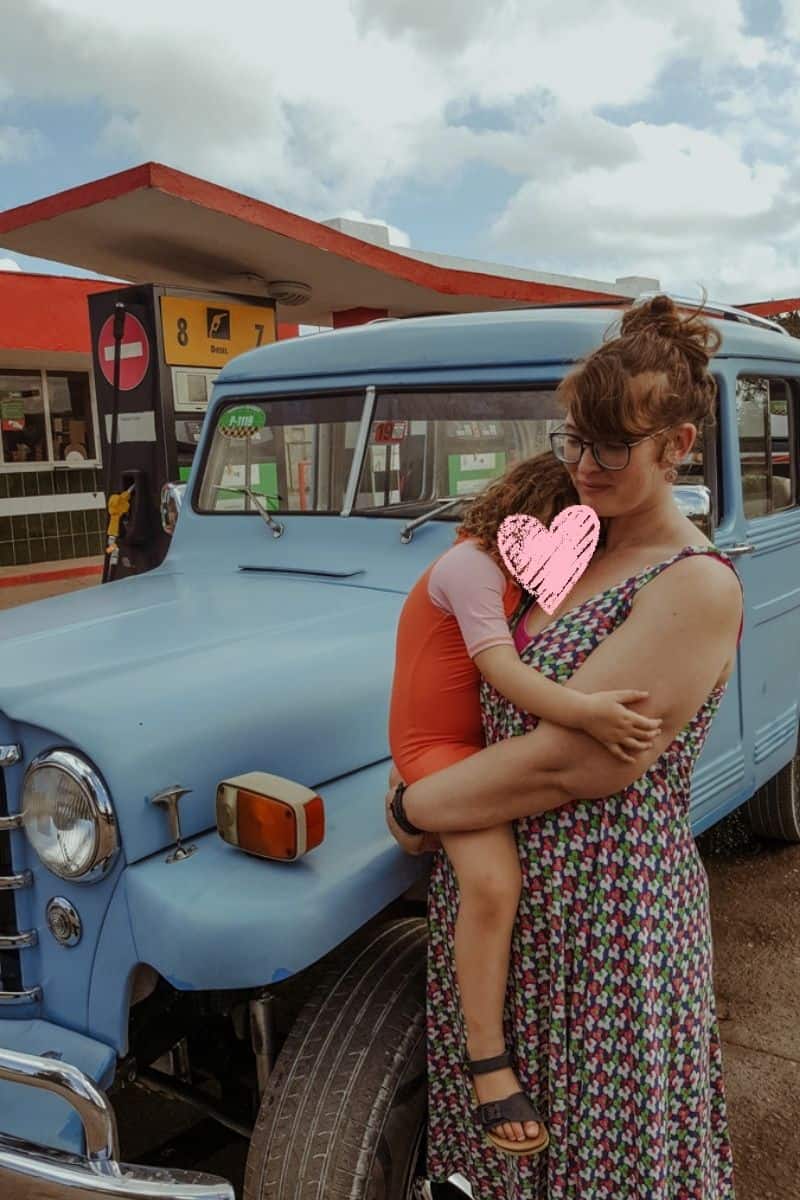
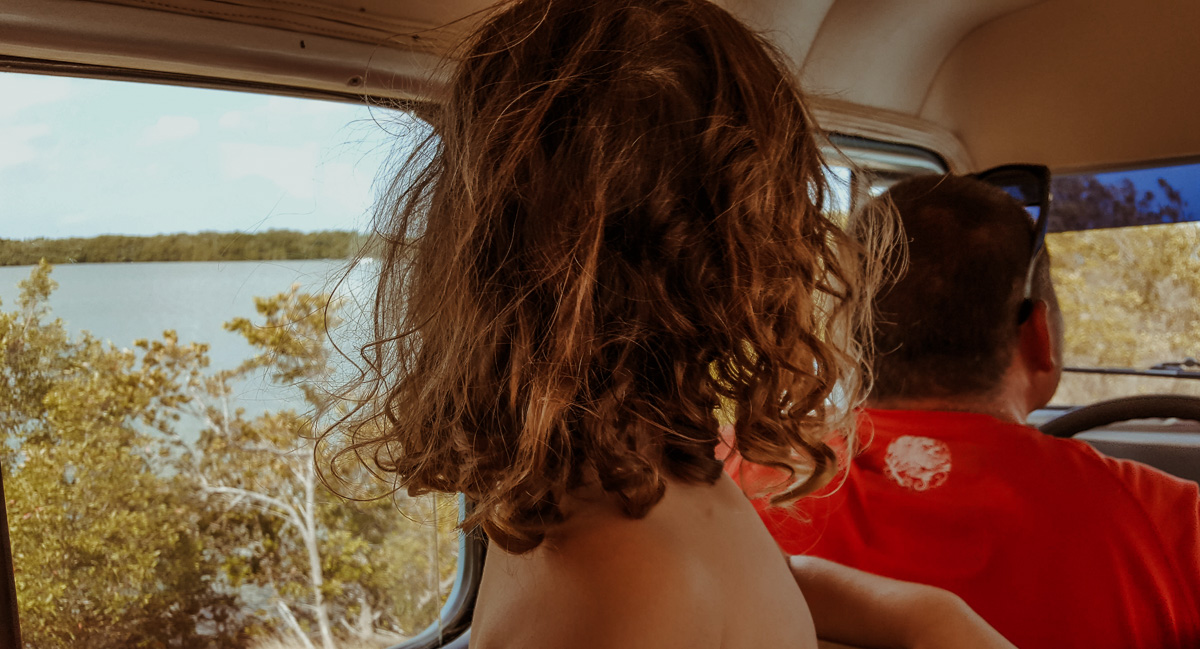
Our driver, Roberto, was obviously very much in love with his beautiful old car and knew how to take care of it. Unfortunately for us, that meant taking every pothole at 5km/hour. We would’ve been faster walking at some points.
Furthermore, it got really hot in the car, as you can imagine: being stuck in an old metal box with 9 adults and a child. But hey, it was another one of those Cuban experiences we’ll never forget.
The island itself is connected to the mainland by a long, narrow causeway built over the sea. It feels remote. And it is. But getting there takes patience.
A typical day trip runs from around 9 AM until 6 PM, which makes it a long and tiring day, especially with young kids. It was a little heavy for our 4-year-old, even though we had so much fun on the beach.
One more thing that’s important: you do not want to drive this road after dark. Drivers in Cuba generally avoid night driving, and once you’ve seen the road conditions yourself, you’ll understand why. That’s why the drivers leave at 16:00h. Don’t miss your ride!
So yes, the beach is absolutely worth it. But be aware that as a neurodivergent family, things might get a little tricky.

Tip 2: Realistically, You’ll Need Arranged Transport
There isn’t a regular public bus to Cayo Jutías. No Viazul. No hop-on-hop-off option.
So in practice, there’s really only one way to get there: shared or private transport arranged in advance.
Most people organise this through their casa particular in Viñales, but you also book it upfront here.
The most common option: taxi colectivo
This is what we did, and it’s what most travellers choose.
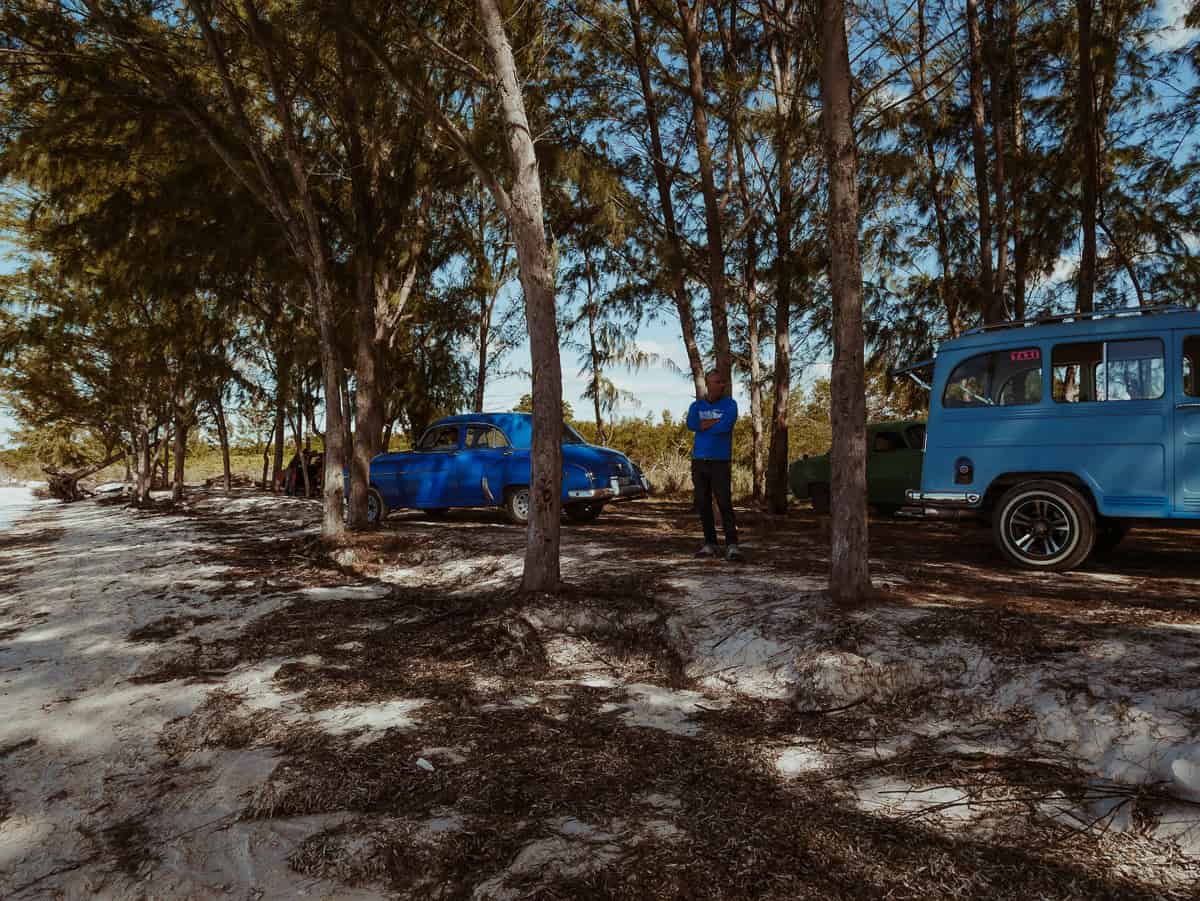
A classic car (usually) picks you up at your accommodation, then goes on to collect a few more people before heading towards the beach.
You pay per seat, usually somewhere between 20–25 USD for the return trip.
(We paid 20 USD because the driver was a friend of our host, and we were gently asked not to mention that to the others paying 25.)
If you have a small child sitting on your lap, you don’t pay for an extra seat.
The driver drops everyone off at the beach around 11:00h, waits there all day, and leaves again around 16:00h, getting you back to Viñales around 18:00h.
It’s simple. It works. And it’s very Cuban.
What about the tour bus?
Now, here’s where my very AuDHD brain comes in.
I wrote in this blog years ago that there is a bus leaving at 9:00h from the Cobanacán office in the centre for around 15 USD, returning at 16:00h. I also wrote that we tried to book it the day before but it was full.
But I can’t verify that online (everyone mentions there’s no public transport), and for the life of me, I have no memories whatsoever.
So if a tour bus exists when you visit, great. But don’t rely on it without checking locally. Oh and please let me know!
Private taxi?
Yes, you can arrange a private taxi so you control the departure time.
Count on paying at least the amount the driver would earn when all the places in their car are filled (minimum 4 in a new car, but most likely 6 or more in a classic one). So anywhere between 100-200 USD.
Make arrangements well in advance!
Rental car?
Technically an option.
Realistically? Very few tourists go this route.
Rental cars in Cuba are limited and often fully booked months in advance. On top of that, finding gasoline can be tricky, and road conditions to Cayo Jutías are rough (see Tip 1). DON’T drive in the dark!
There is a parking lot at the main beach entrance, but driving yourself only makes sense if you’re already experienced navigating Cuba independently.
But one really big plus of this option? You can be here outside of the hotspot hours (11:00h-16:00h) and enjoy this gorgeous beach all by yourself.
Tip 3: Pick Your Beach Area Wisely
Although Cayo Jutías looks like “one beach” when you glance at a map, it doesn’t feel the same everywhere.
Depending on where you settle, your day can feel busy and practical or remote and almost deserted.
The beach can roughly be divided into three main areas:
🏝️ The Central Part: Easy, Practical, and the Most Touristy
This is where most people end up, because it’s where the road finishes.
You’ll find the main restaurant (Playa Arena), a couple of bars, places that rent out beach chairs and umbrellas, and the dive shop. There’s also a big parking lot here.
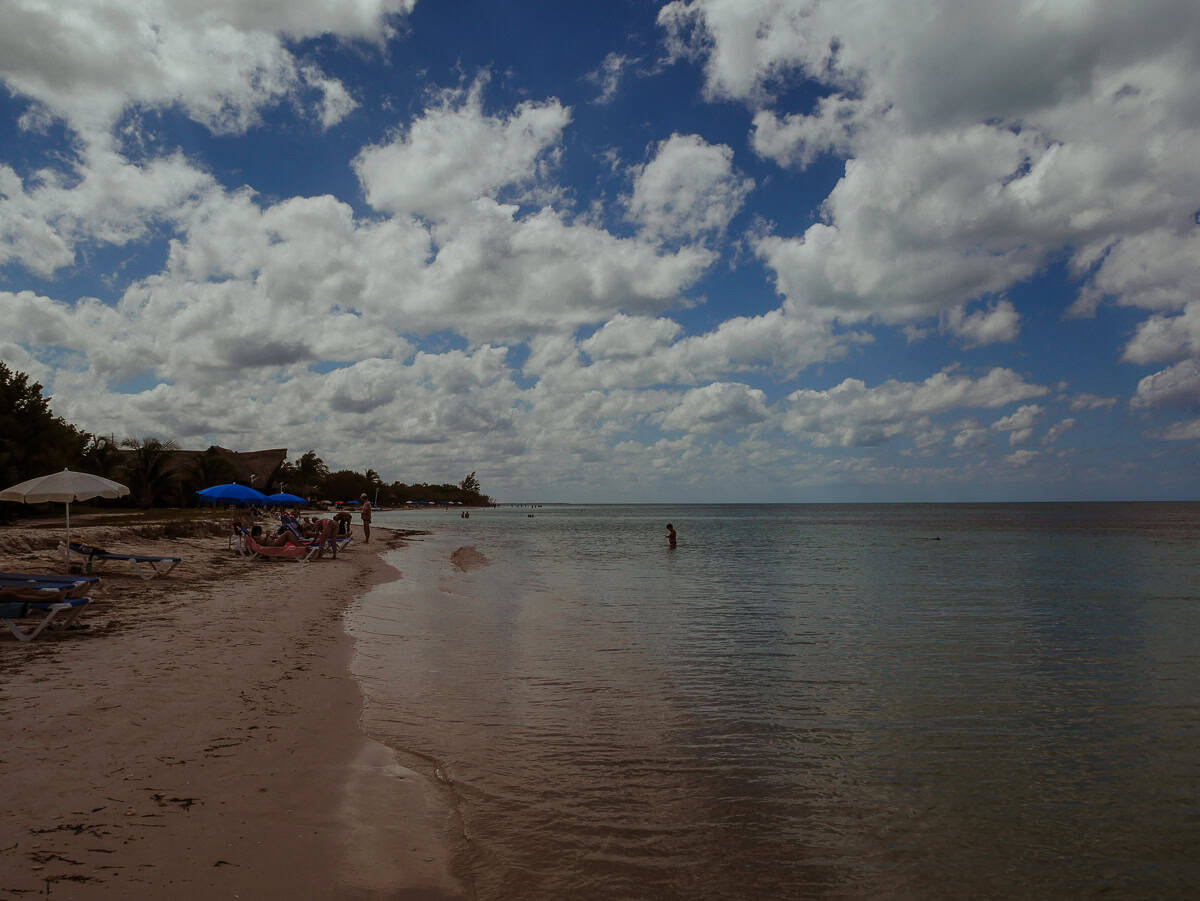
The beach itself is quite narrow in this section — only a couple of metres wide — and the rented chairs take up most of the space. But you won’t mind walking with your feet in the clearest water you’ll ever see.
If you want drinks nearby, easy access to toilets, and the option to rent shade, this is the most convenient place to be. Just know that this is also where the day-trippers gather, so it can feel a bit more crowded.
🏝️ The Eastern Part: Mangroves, Shade, and the Lighthouse
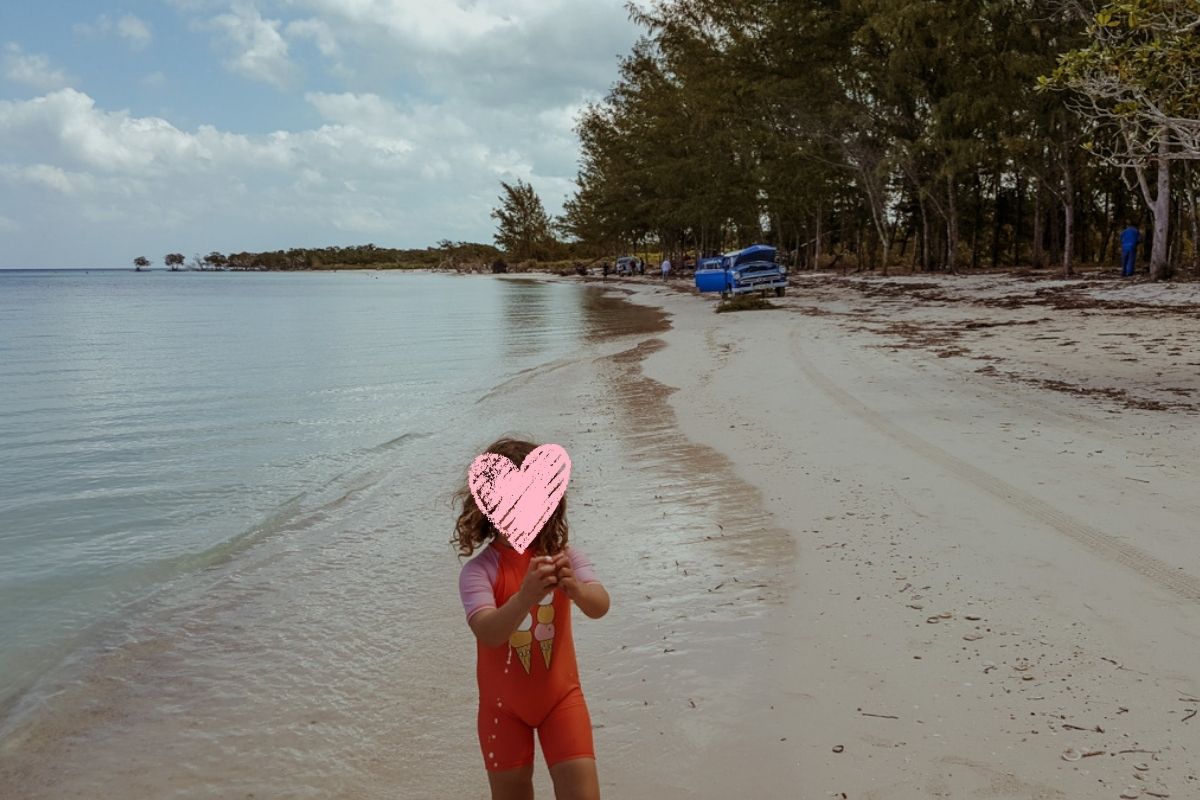
If you’re going to Cayo Jutías from Viñales, the classic car will drive right upon this part of the beach (and yes, you can take that literally).
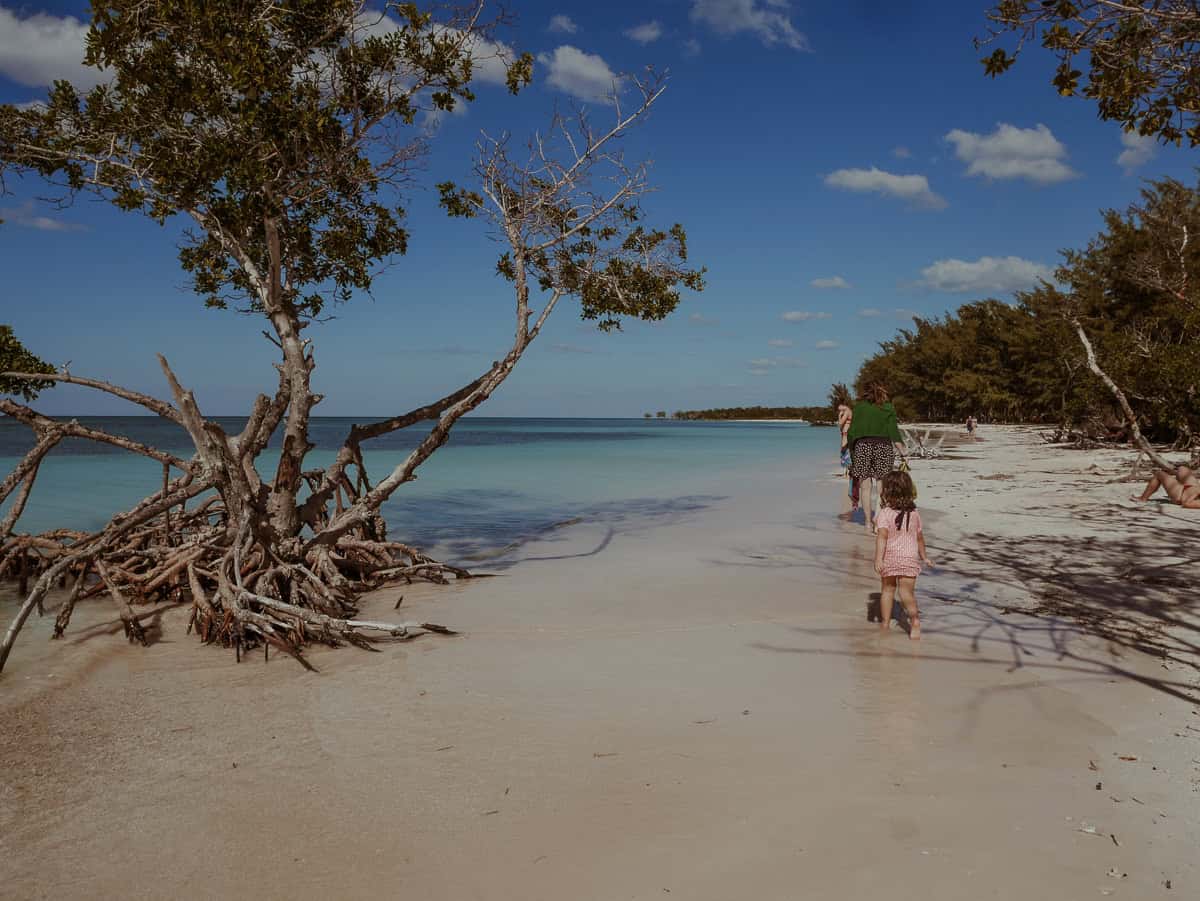
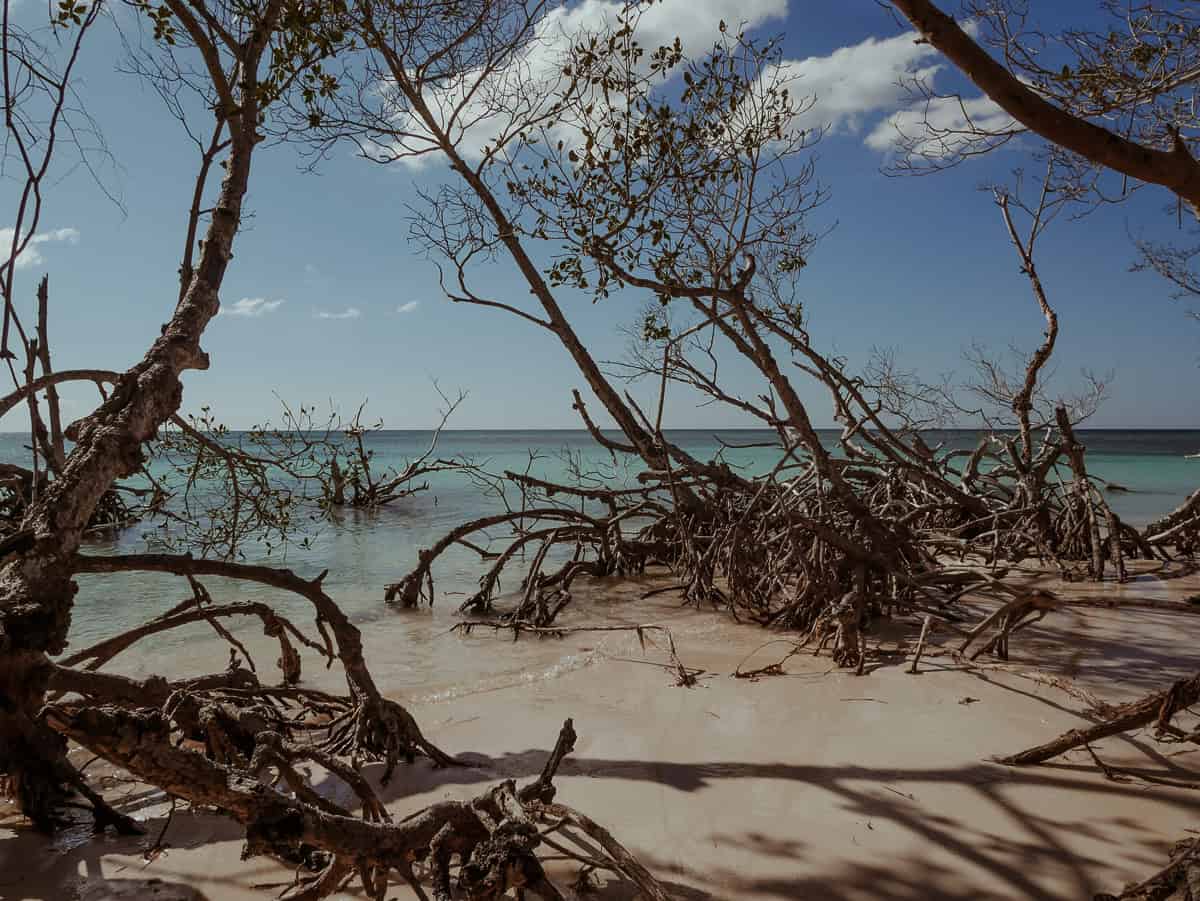
It’s a more remote part of the beach and to get to the touristy part, you have to walk through the mangroves. Don’t worry, it’s a clear path, just a bit of walking over tree roots. Our 4-year-old absolutely loved it.
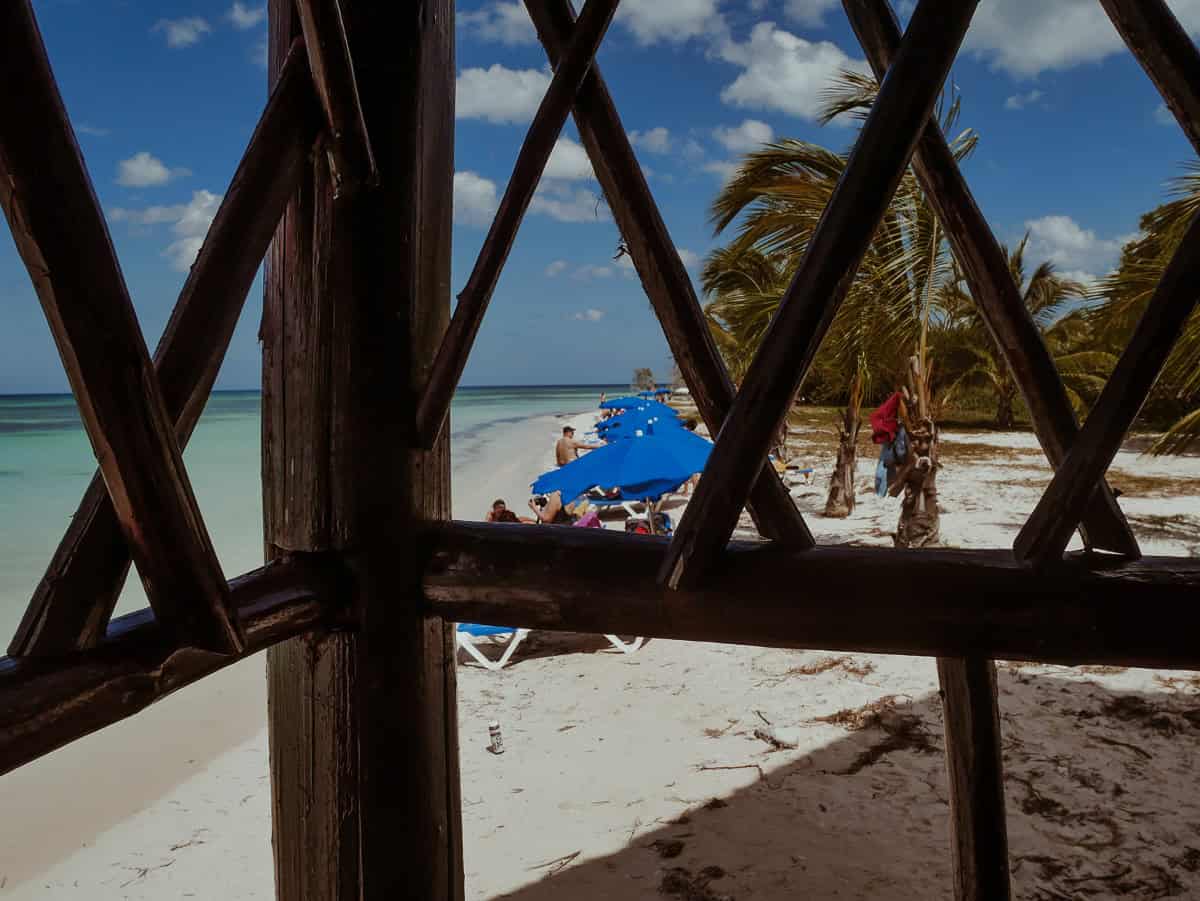
This side has more trees (mangroves and pines), which means natural shade. We even saw a family hang a hammock between the trees, which I thought was brilliant.
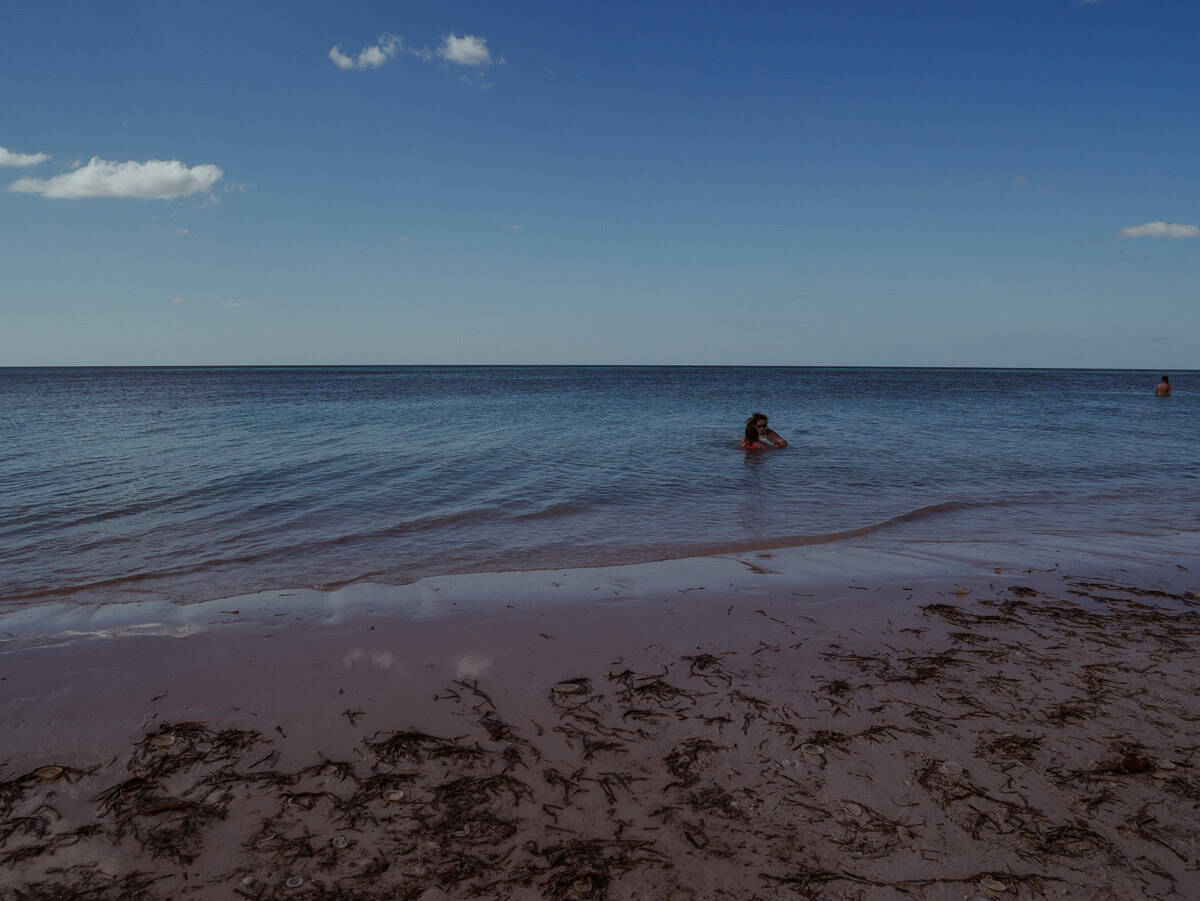
There’s a bit more seaweed here, and no facilities, but it feels calmer and more spacious.
If you continue all the way toward the far eastern end, you’ll reach the old lighthouse (Faro Cayo Jutías). It dates back to the early 1900s and is no longer in use. We didn’t climb it ourselves, but from what we’ve read, there are wide views over the cay and the surrounding sea.
Our driver also told us that the best snorkel spot is near the far eastern tip of the key. We didn’t check that out for ourselves, but please be my guest!
🏝️ The Western Part: Quieter, and Home to the Starfish
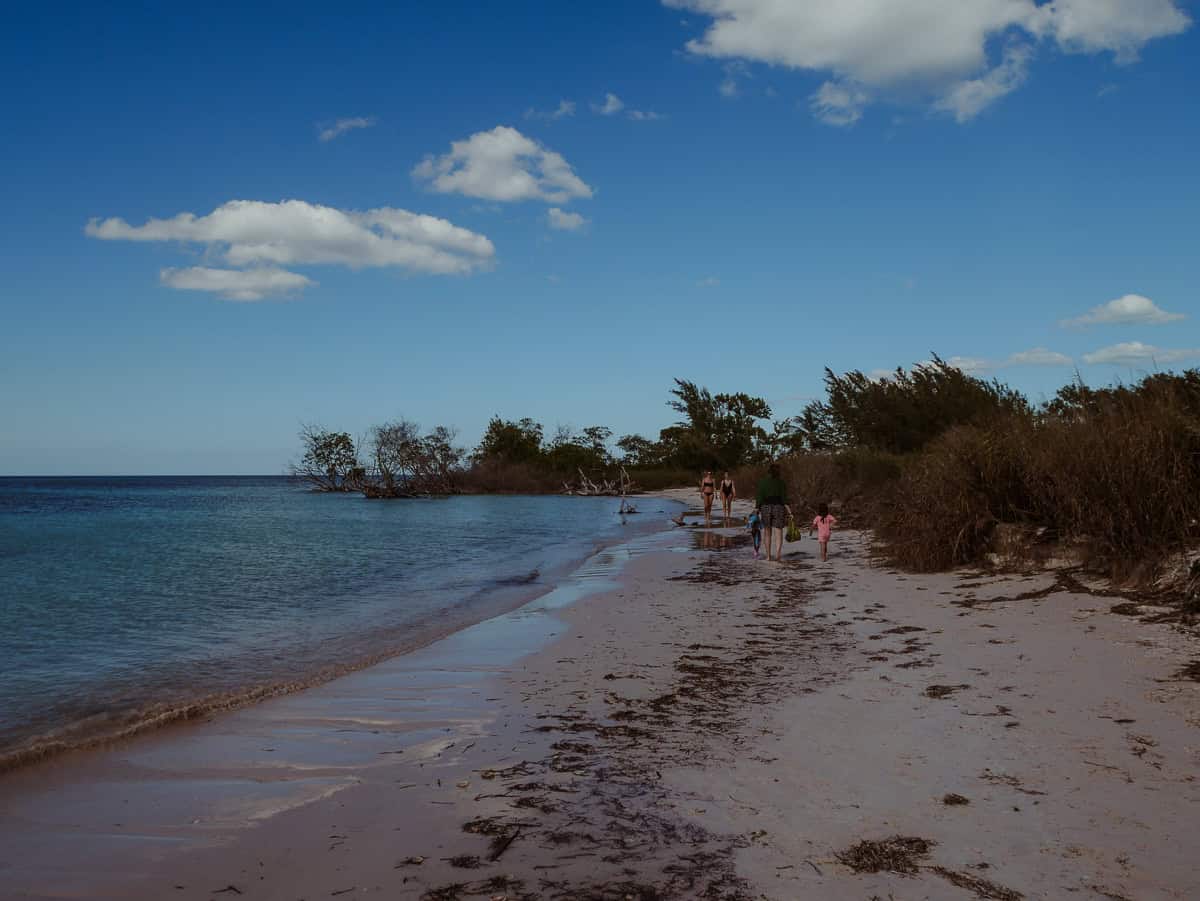
If instead you walk past the main restaurant in the opposite direction, you’ll reach another, increasingly remote stretch of beach.
There are a couple of bars at first, but the further west you head, the more relaxed it becomes. The beach just keeps going.
At the far western end, you’ll find what many people refer to as Playa Estrellas (Starfish Beach). This area is known for the bright orange-red starfish that live in the shallow water.
It’s important to mention that this is considered a conservation area (you’ll also have to pay an entry fee), and visitors are not supposed to touch or remove the starfish. If you want to see them without disturbing the ecosystem, you can sometimes arrange a short boat trip locally.
According to the Maps.me app, there’s also a viewpoint further along this western stretch, although we didn’t make it that far ourselves.
Tip 4: Don’t Rely on the Restaurant (Bring Food If You Can)
The only facilities available in Cayo Jutías are a restaurant, a couple of bars, and places to rent beach chairs and umbrellas. There are no shops on the island.
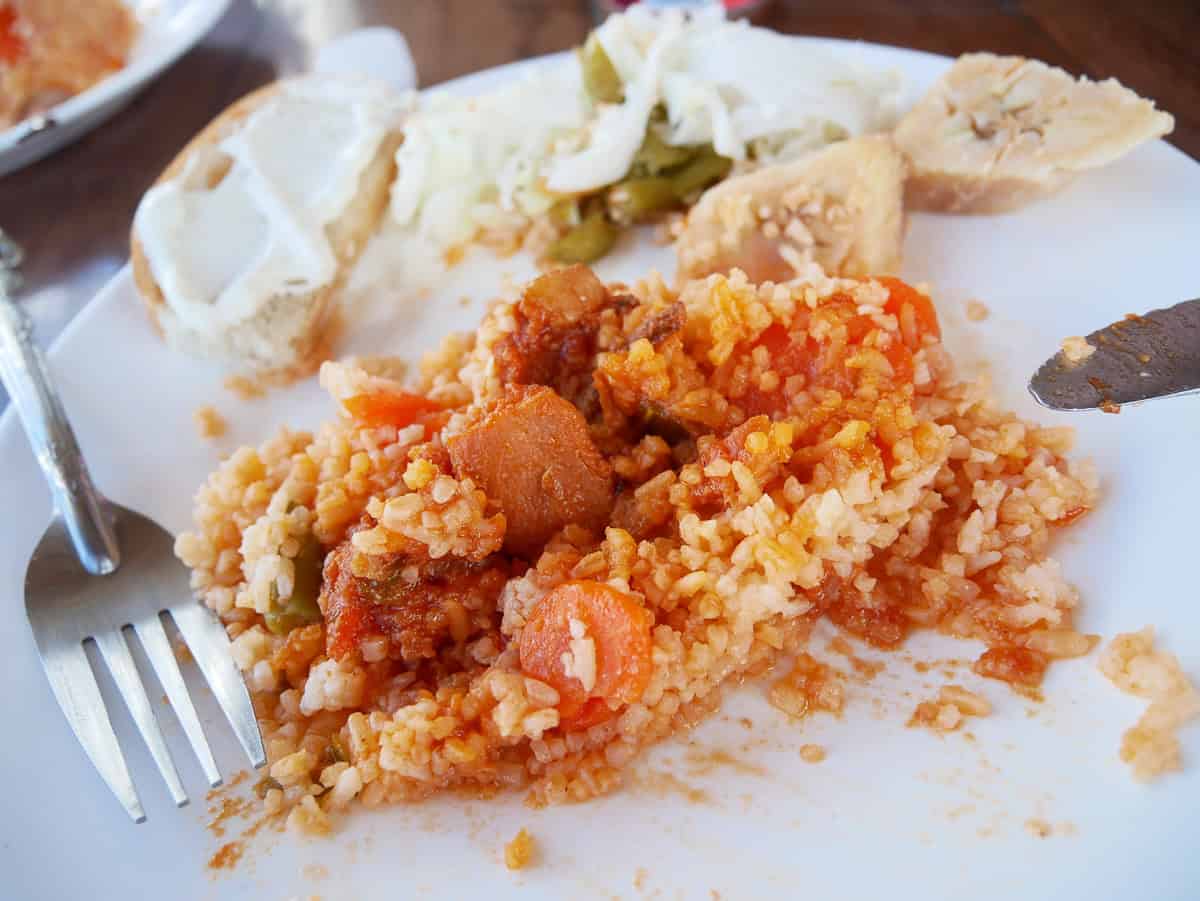
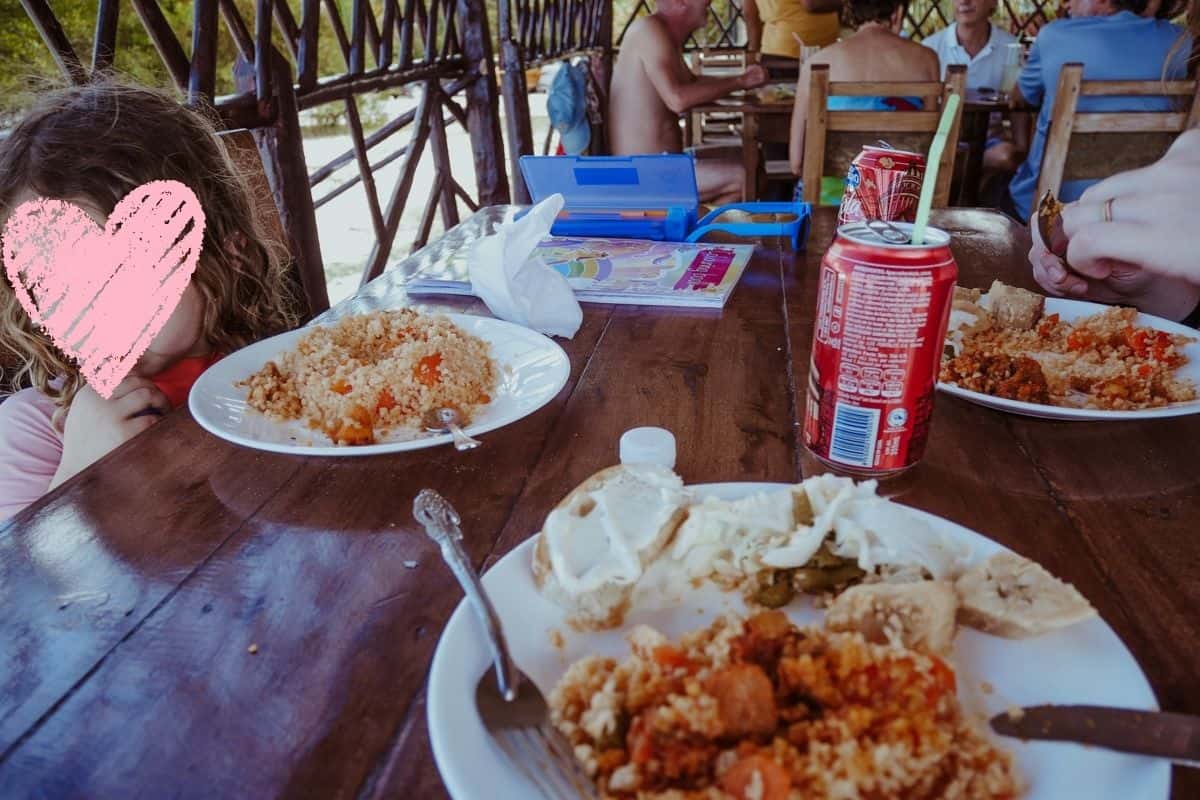
We had lunch at the main restaurant, Playa Arena, and it was the worst food we ate during our whole trip to Cuba.
You get to choose between a couple of main dishes: rice with lobster, rice with shrimp, rice with fish, or the house speciality, which is a mix of those three.
Kath decided to go for the lobster (we had to try freshly caught lobster in Cuba, right?) and I went for the mixed one. We also ordered a side dish of plain white rice for Norah, just in case she didn’t like the rest.
Apart from the food, which we barely found edible, the service wasn’t anything to write home about either. We might be a bit picky when it comes to food, but we definitely aren’t difficult when it comes to service, location, or comfort.
The waitress was unfriendly (although she did have to run the whole place by herself), and it took us two hours for this lunch break — and we didn’t spend much of that time eating.
We ordered a bottle of water that we never received. Fortunately, we had brought our daughter’s drinking bottle, so she had something to drink while eating.
The bill wasn’t too cheap either (22 USD), but as this is the only restaurant on the beach, we kind of saw that one coming.
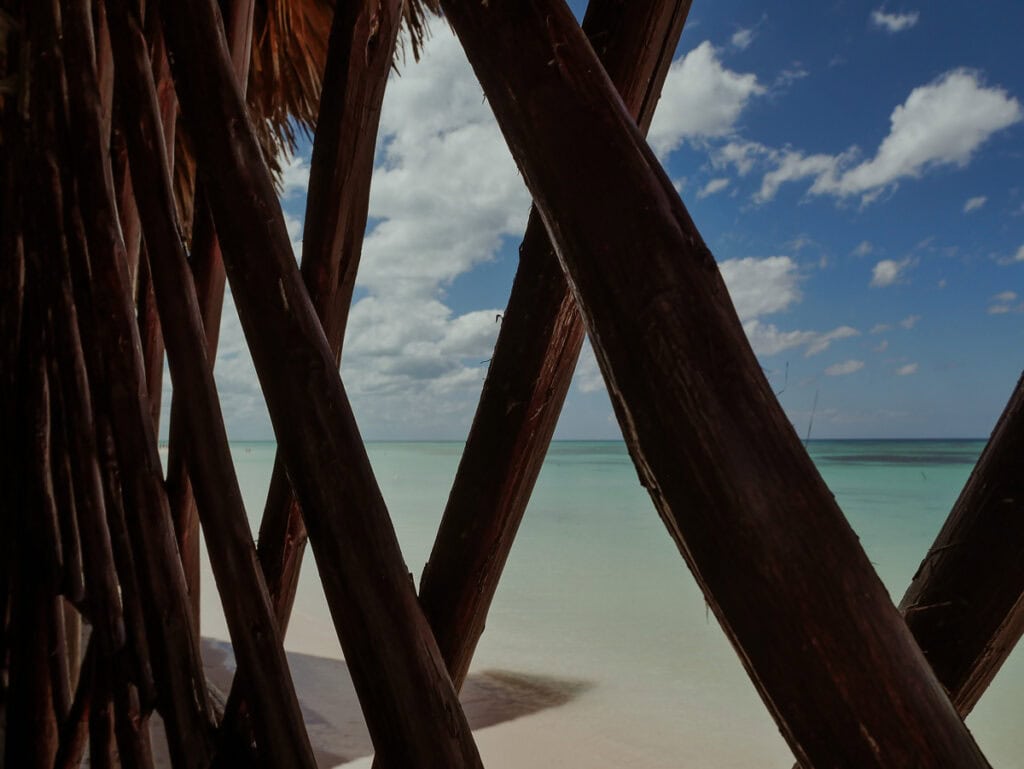
Now — to end this rant on a more positive note — the location is absolutely breathtaking. The open building with its banana leaf roof checks every box on the Caribbean-feeling checklist.
Unfortunately, their monopoly has likely caused the food and service to decline (or maybe it was never that good to begin with), and that might not change anytime soon because it’s still jam-packed with daytrippers every single day.
As an alternative, we read that the bar next door sells sandwiches that are much better. And we’ve heard some talk about freshly caught lobster being sold on the beach. We didn’t verify that ourselves, though.
So here’s my honest advice:
If you can, bring snacks. Bring water. Maybe even pack a simple lunch.
Because once you’re there, this is your only option.
And waiting two hours for mediocre food on a long, hot day is not ideal, especially with kids.
There is a toilet inside the restaurant. It’s free if you bring your own toilet paper. We’d had it so much with the restaurant by that point that we didn’t even check it out.
It’s a beautiful place. Just go in prepared.

Tip 5: Prepare for Sun, bugs & a Long Beach Day
Cayo Jutías is a 3km stretch of white sand with very little natural shade — especially in the central part of the beach.
The sun in Cuba is strong. Even when we visited in early March, it would’ve been too hot to stay in direct sunlight all day (especially that early in our trip and with our European winter skin).
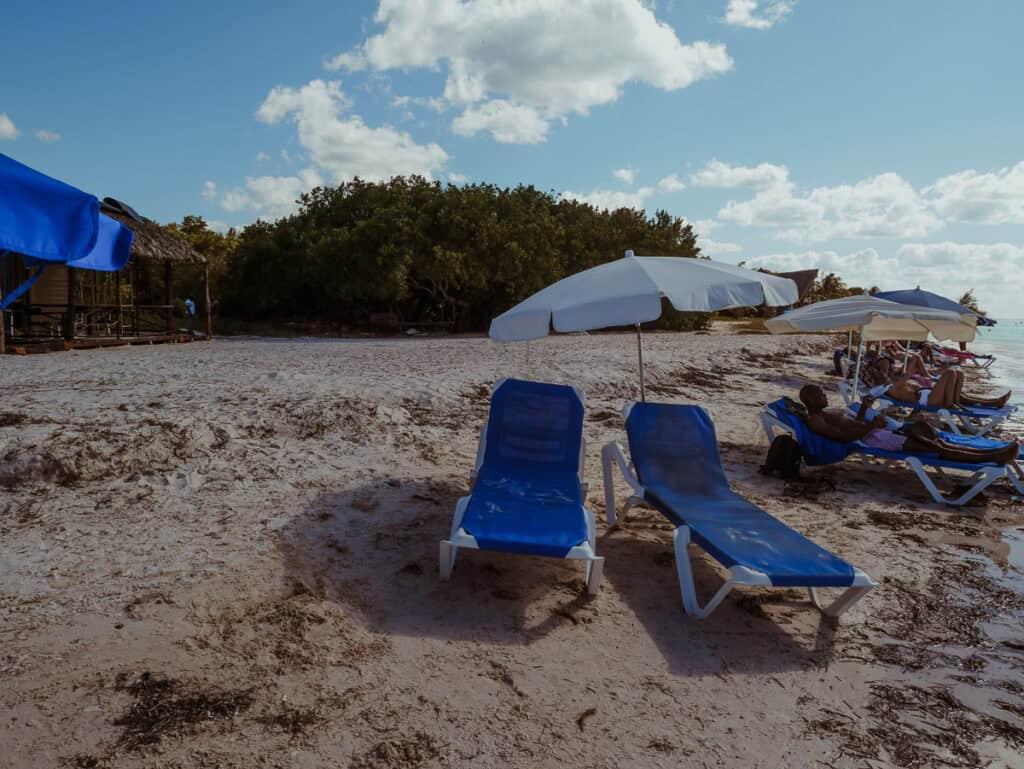
In the central area, you can rent beach chairs and umbrellas. You’ll pay 4 USD for an umbrella and 3 USD for a lounger. We spent 10 USD (umbrella + 2 chairs) and although it’s not cheap, we were very happy with that decision.
Having shade made a huge difference.
Furthermore, on many of the Cuban beaches, you can encounter sand flies. We were warned about them being in Cayo Levisa and later on our trip, we had some bites when we were in Playa Larga. We preferred not to take any chances and rented chairs instead of lying down on a towel
If you walk toward the eastern part of the beach, you’ll find more natural shade under mangroves and pine trees. That’s a great option if you don’t want to rent umbrellas, but keep in mind there’s more seaweed, fewer facilities and a lot of mosquitos (bring repellent!).
There are no shops on Cayo Jutías, but you can buy water in the restaurant and in some of the small shacks on the beach.
Make sure you bring:
- Snacks (especially if you’re travelling with kids)
- Sunscreen
- A hat and sunglasses
- Mosquito repellent
- Small cash for rentals and drinks
There is a toilet inside the restaurant. It’s free if you bring your own toilet paper.
Can you stay over at Cayo Jutías?
How awesome would it be to spend a night here, right?
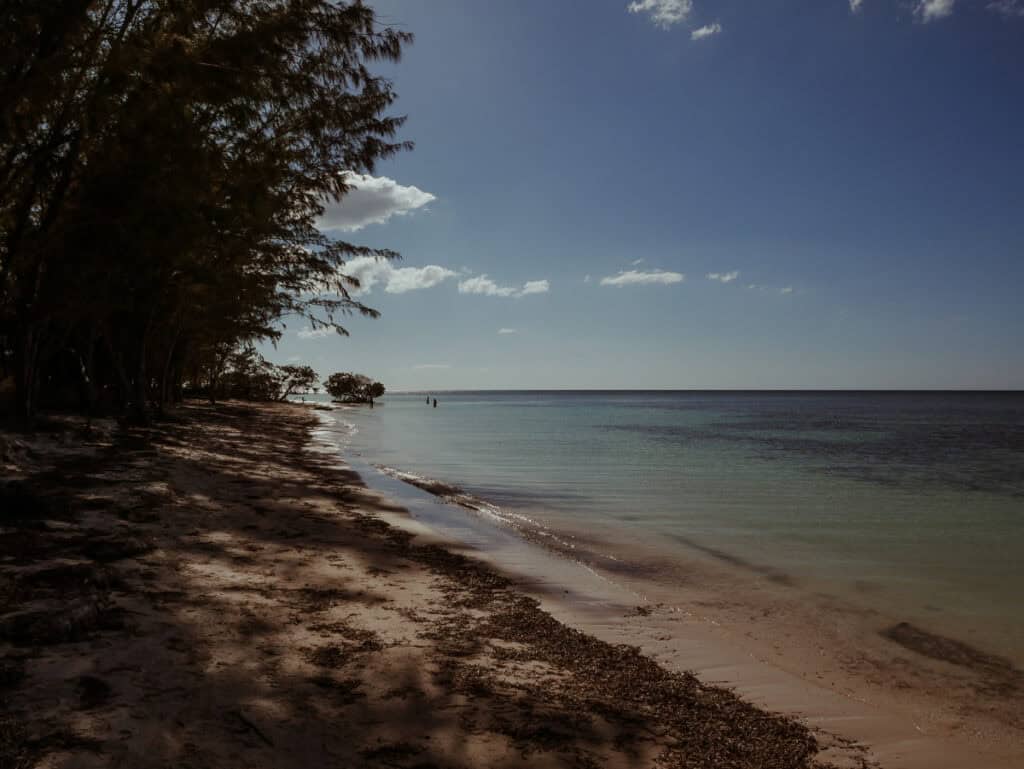
One of the best parts of this beach is its remoteness. However, it’s uninhabited, which means it is not possible to find accommodation nearby. What a dream it would be to have this beach all for yourself when all the daytrippers are gone!
Casa Jutías is a casa particular and the closest accommodation to Cayo Jutías you’ll find.
It’s along the road to the beach. In only 15 minutes, you’ll be on the white sand with your feet in the water, but arranging transport might be a bit of a hassle (you can rent electric scooters for 15 USD a day, or you can always take a horse-drawn carriage right up to the beach – just like the locals.)
I assume the casa owner will be able to tell you more about the best way to reach Playa Jutías. The reviews for this casa are extraordinarily good and you get free breakfast if you book 3 nights or more! Oh, and there’s also a pool. Check prices and availability here.
Alternatively, you can find more casas particulares in Santa Lucia.
However, as transport outside of the beaten path can be quite difficult (and expensive!) to arrange in Cuba, we would recommend staying in Viñales and visiting Cayo Jutías on a day trip.
Cayo Jutías or Cayo Levisa?
Cayo Jutías is one of the best and prettiest beaches near Viñales, Cuba. However, there’s another competitor for that title: Cayo Levisa.
This island can be visited as a day trip from Viñales, too – but it’s also possible to stay the night. This offers the opportunity to have this beach all for yourself once the daytrippers are gone.
We originally put two nights on Cayo Levisa on our itinerary but decided against it for budget reasons. We still hope to visit it one day, because the thought of staying at this dreamy, white sandy beach sounds absolutely amazing.
As a day trip from Viñales, you’ll pay 45 USD for transport (1-hour bus and 30-minute boat ride) and lunch at the island resort is included. If you would like to spend the night (or a couple of nights), you’ve got 2 options:
- Villa Cayo Levisa: This all-inclusive 3-star hotel is the most popular option when visitors want to spend the night on the island. Quality-wise, it isn’t the best: the food is not great and some of the cabins are getting old. But the location right on the beach makes it all worthwhile. If you book a night, you don’t have to pay for the ferry.
- Villa Gustavo y Mary: if you’re looking for a less touristy way to visit the island, there’s also one casa particular in Cayo Levisa. This house is not located on the beach, but the owner will bring you in 5 minutes with a horse-drawn carriage (something to check off your Cuba-to-do list!). The reviews are unanimously great (5* on Airbnb). Check the price (almost nothing, really) and availability here if you want a real Cuban experience. This casa is definitely on the list for our next visit!
So, is cayo Jutías worth it?
Even as a neurodivergent family, it’s an absolute yes from us. We loved visiting Cayo Jutías as a day trip from Viñales; but it was a tiring day that started at 9 AM and we got back home at 6.15 PM, which was a little heavy for our 4-year-old.
The drive was long, hot, and bumpy but the beach and ocean made it all worthwhile. Make sure to pack lunch instead of eating at the main restaurant. We hope you have an amazing day!