Epidaurus With Kids: A Practical Guide to Visiting the Ancient Theatre
There’s a good chance this post contains affiliate links. This means that if you purchase anything through one of our links, we’ll receive a small fee (it won’t cost you anything, promise!). As an Amazon Affiliate, we earn from qualifying purchases. If you would like to learn more about our affiliate partners, click here for our disclaimer.
Epidaurus is one of the most famous archaeological sites in Greece and we absolutely loved it!
Epidaurus is an ancient sanctuary in the Peloponnese built around the worship of Asclepius, the Greek god of healing, and it is home to one of the best-preserved ancient theatres in the world.
We visited during our Peloponnese road trip and were surprised by how green and spacious it felt compared to some of Greece’s more crowded landmarks.
The theatre is huge, easy to visualise, and gives kids space to move without feeling trapped in tight ruins or endless museum rooms.
I’ll walk you through what visiting Epidaurus is actually like with kids, including practical details, what to expect on-site, and small things that can make the visit easier for the whole family, especially if you’re a neurodivergent family that likes to know what to expect.
Epidaurus at a Glance
📍 Where: Ancient Epidaurus, Peloponnese, Greece (30 min. east of Nafplio)
⌚ Time Needed: 1 to 3 hours
🚗 How to Visit: Rental car or this full-day guided tour (Corinth Canal, Mycenae, Nafplio & Epidaurus)
What Is Epidaurus?
Epidaurus is an ancient sanctuary in the Peloponnese dedicated to Asclepius, the Greek god of healing. People used to travel here from all over the ancient world, hoping for cures or guidance, so it wasn’t just a religious site but also a kind of early medical centre.
The theatre that most visitors come for today was built in the 4th century BCE and is part of the wider sanctuary complex.
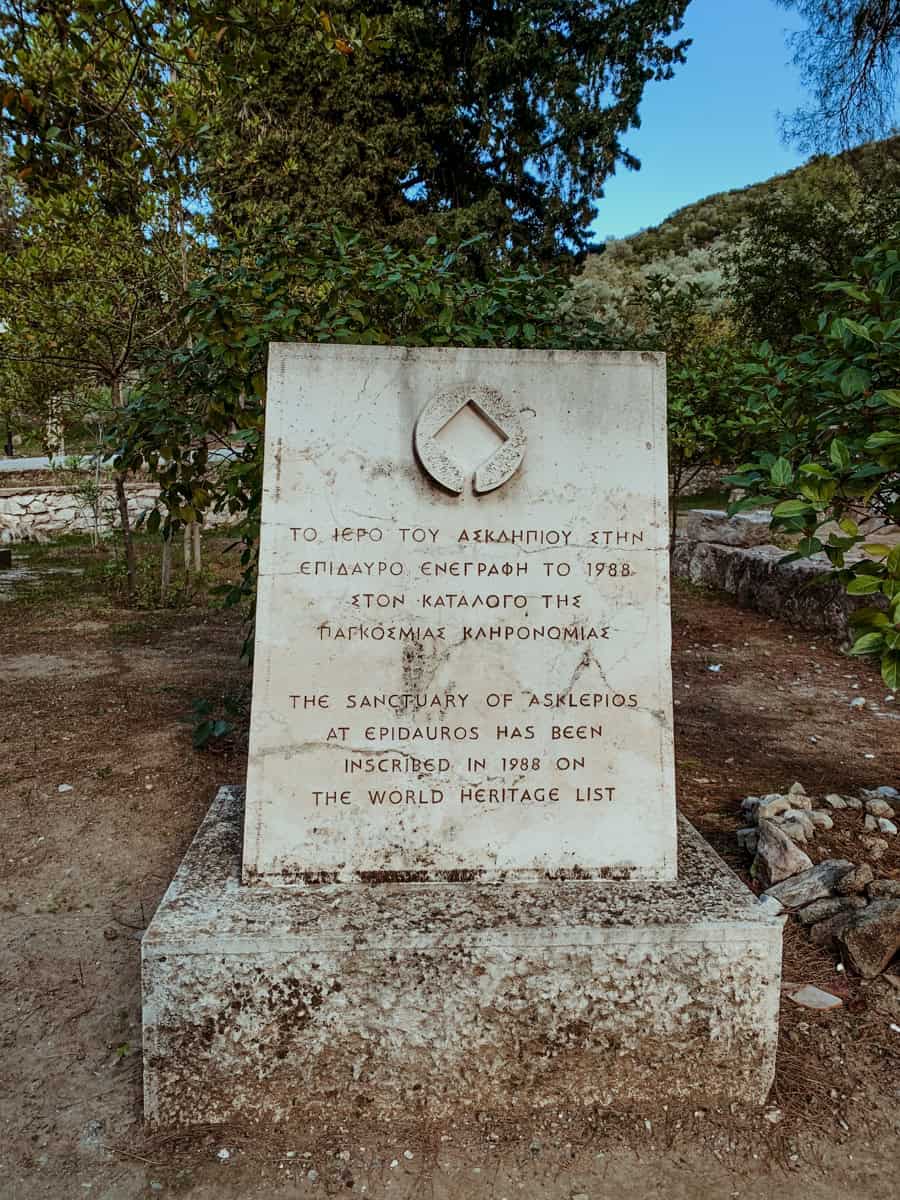
It’s now a UNESCO World Heritage Site and there are several ruins spread across the area. Everything is fairly open and it doesn’t feel overwhelming or complicated to follow like many archaeological sites.
Why Is Epidaurus Famous?
- The theatre’s acoustics (you’ve probably heard about this already)
- One of the best-preserved ancient theatres in Greece
- Still used today for performances during the Epidaurus Festival
- Very visually clear layout, even if you know nothing about ancient history
The theatre is really the main event here.
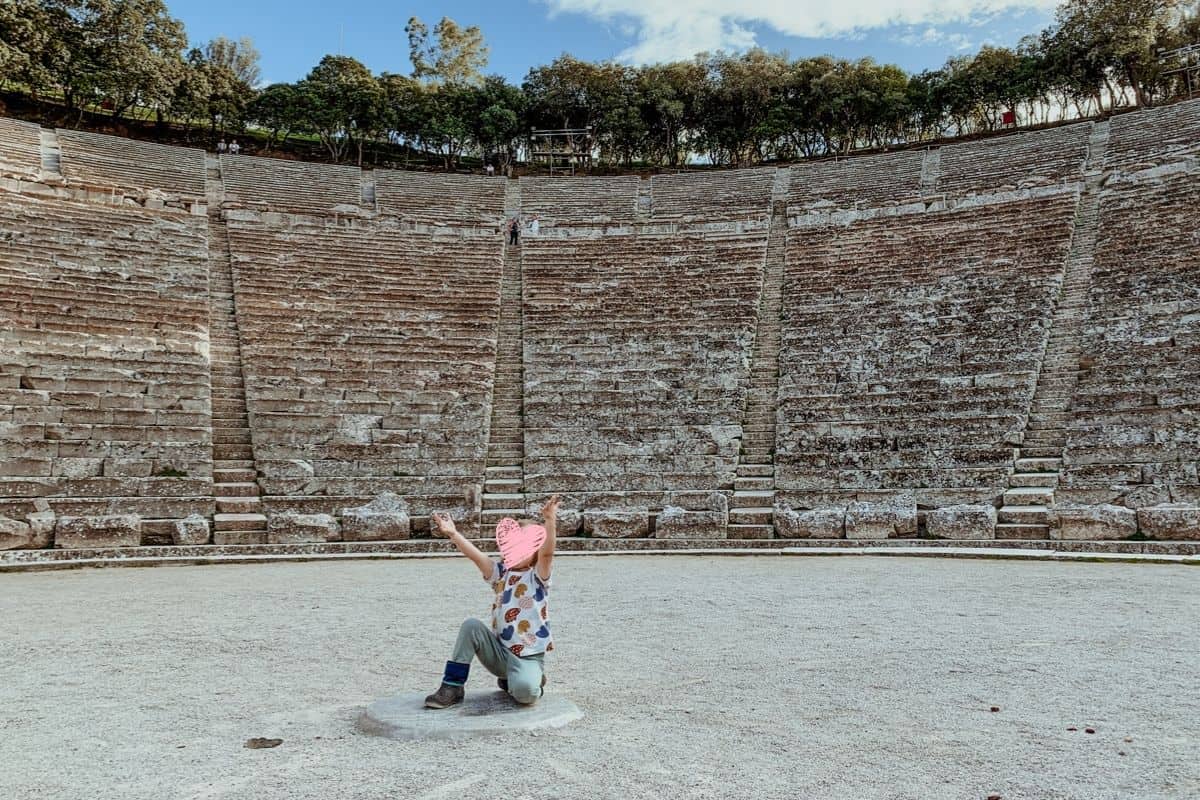
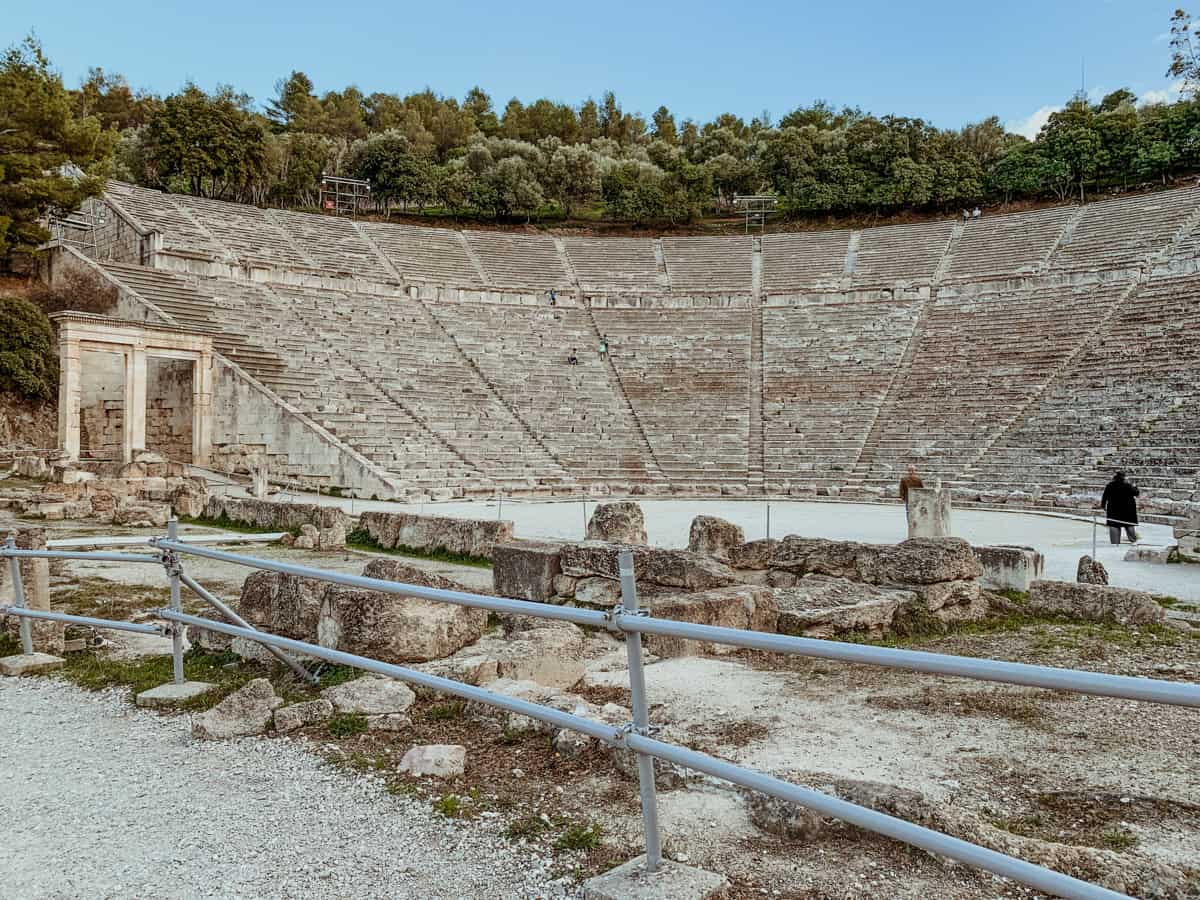
It’s large, very intact, and immediately understandable when you see it. Even if your kids don’t care about Greek history at all, the scale of it tends to get a reaction. You can stand at the bottom and look up at all the seating carved into the hillside, and it just clicks without explanation.
And yes, the acoustics are real.
The theatre was designed so that sound from the centre of the stage carries all the way to the top rows without any amplification, which is remarkable for a structure built in the 4th century BCE.
The shape of the seating and the limestone used in construction both play a role, and researchers are still debating exactly how it works.
What you need to know as a visitor is that it does work, and it’s one of those things that’s hard to appreciate until you’re actually standing there hearing it for yourself. You’ll often see people testing it out by speaking from the centre of the stage and hearing it at the top rows. It’s simple and a bit theatrical, but kids typically love it (yes, ours tried it out).
Where Is Epidaurus?
Epidaurus is located in the northeastern part of the Peloponnese region in Greece. It’s not right next to Athens, but it’s close enough to do as a day trip if you don’t mind driving a couple of hours.
Approximate travel times:
- Around 2 to 2.5 hours from Athens
- About 30 minutes from Nafplio
One thing that confuses people is that “Epidaurus” can refer to two different places. There is the ancient archaeological site (what most people visit), and then there is the modern seaside town of Epidavros (sometimes called Palaia Epidavros). They’re close, but not in the same place.
If you’re travelling with kids, Nafplio is the easiest base. This is what we did during our Peloponnesian road trip. Nafplio a super charming coastal town with restaurants, a walkable old centre, and enough going on without feeling busy.
From there, Epidaurus is an easy half-day trip and doesn’t need an early start or a long drive through unfamiliar areas.
The roads in this part of the Peloponnese are straightforward. Nothing complicated or stressful. It’s mostly well-maintained highways and rural roads with clear signage.
How to Get to Epidaurus
By Rental Car
This is the simplest option for families. You’re not tied to tour schedules and you can stop for snacks, bathrooms, or just a break.
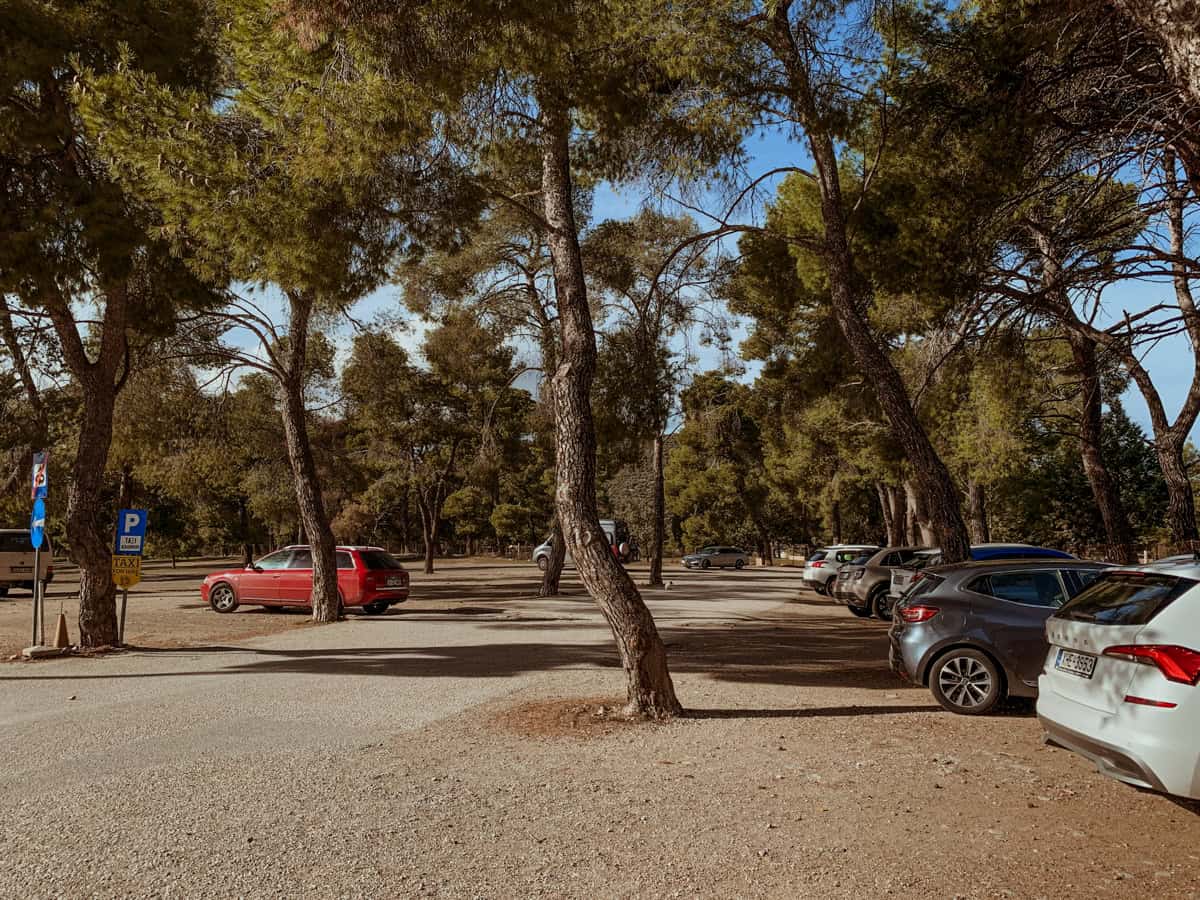
The drive itself is manageable. From Athens or Nafplio, it’s mostly straightforward roads and clearly signposted routes. Parking near the archaeological site is available and generally easy to use, even in busier periods (plus, there’s a lot of shade!)
Another advantage is flexibility. Epidaurus doesn’t really need a full day unless you’re combining it with other stops, so having a car makes it easy to pair it with places like Mycenae or the beaches around Nafplio without rushing through everything.
It also means you can leave early if the visit feels done.
By Guided Tour
Epidaurus is commonly included in day tours from Athens, usually as part of a wider loop through the Peloponnese. Most standard itineraries include Mycenae, Epidaurus, Nafplio, and the Corinth Canal.
The biggest advantage of a tour is simplicity. You don’t need to think about driving, navigation, or timing. Everything is organised and you just follow the schedule.
That said, these are long days. You’re usually on the move for most of the day, with several stops packed in. For some families that works fine, especially if everyone is used to structured travel days. For others, it can feel a bit rigid.
The main limitation is flexibility. If kids get tired or need a break, you can’t really adjust the plan. You also don’t get to decide how long you stay at each stop, which I always find very hard. Nafplio is such a beautiful town and Epidaurus really deserves some time to take it all in, instead of rushing (I’m not saying these parts of a guided tour are rushed, it’s just what I always fear will happen).
By Public Transport
It’s technically possible to reach Epidaurus by public transport, but it’s not the most practical option for families doing a day trip.
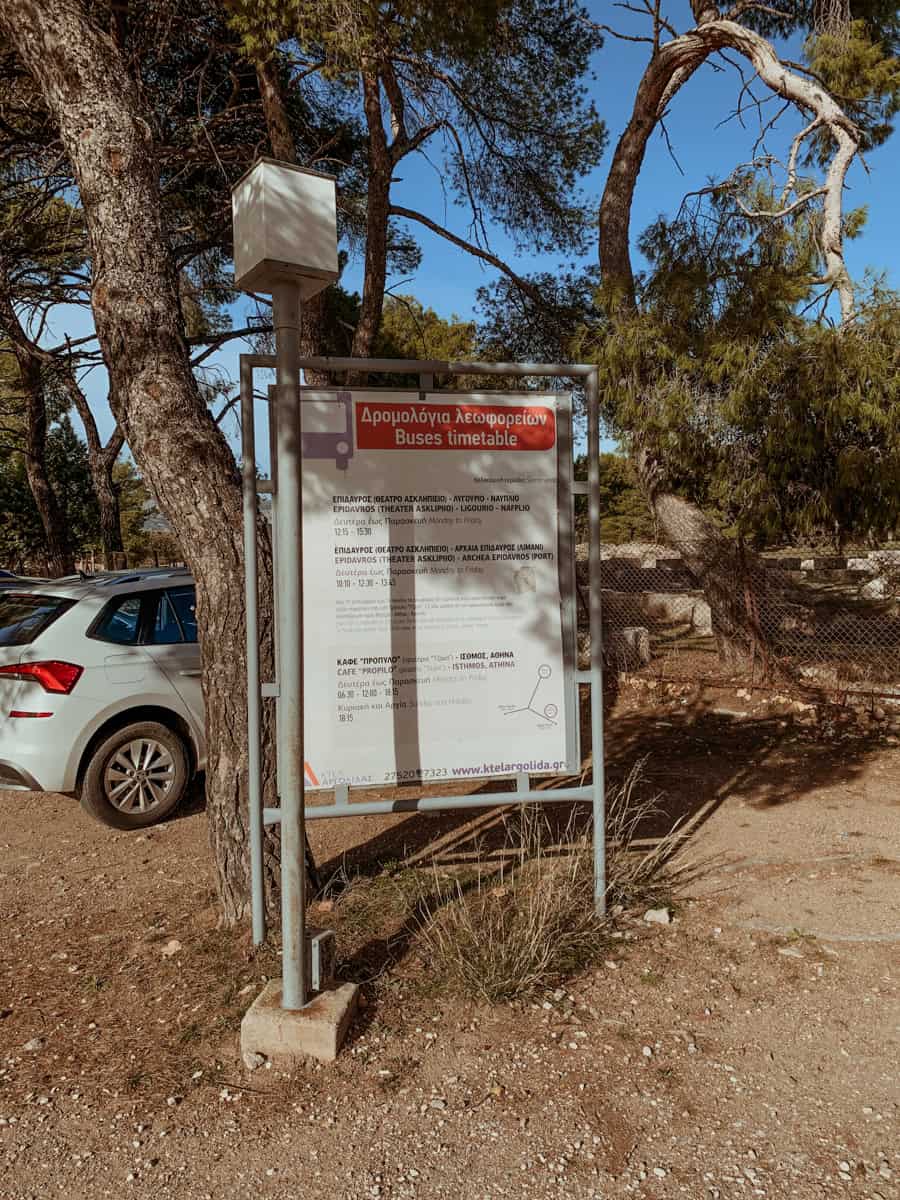
You would need to travel via bus routes with transfers, and schedules can be limited depending on the season. It’s not a direct or seamless journey.
It can work for slow travel or if you’re staying in nearby towns for several days. But for a straightforward visit from Athens or Nafplio with kids, it just adds more complexity than it’s worth.
What the Archaeological Site Is Like
In Epidaurus, you don’t walk into a dense cluster of ruins or confusing pathways. It’s more spread out, with hills and trees framing the whole area. The theatre sits slightly apart as the clear focal point.
The overall atmosphere is definitely calmer than places like the Acropolis in Athens. Even when there are visitors around, it rarely feels packed or chaotic. You can still hear birds, there’s space to move, and it doesn’t feel like you’re constantly navigating crowds. The area is very green and the trees definitely help a lot to make things manageable if you’re visiting in summer.
It also isn’t visually overwhelming. You’re not trying to piece together scattered ruins everywhere. Instead, you can clearly see what you’re looking at and how it all fits into the landscape. I’m talking mostly about the theatre there though, because most of the other ruins are scattered and need a lot of imagination to visualise what they once were.
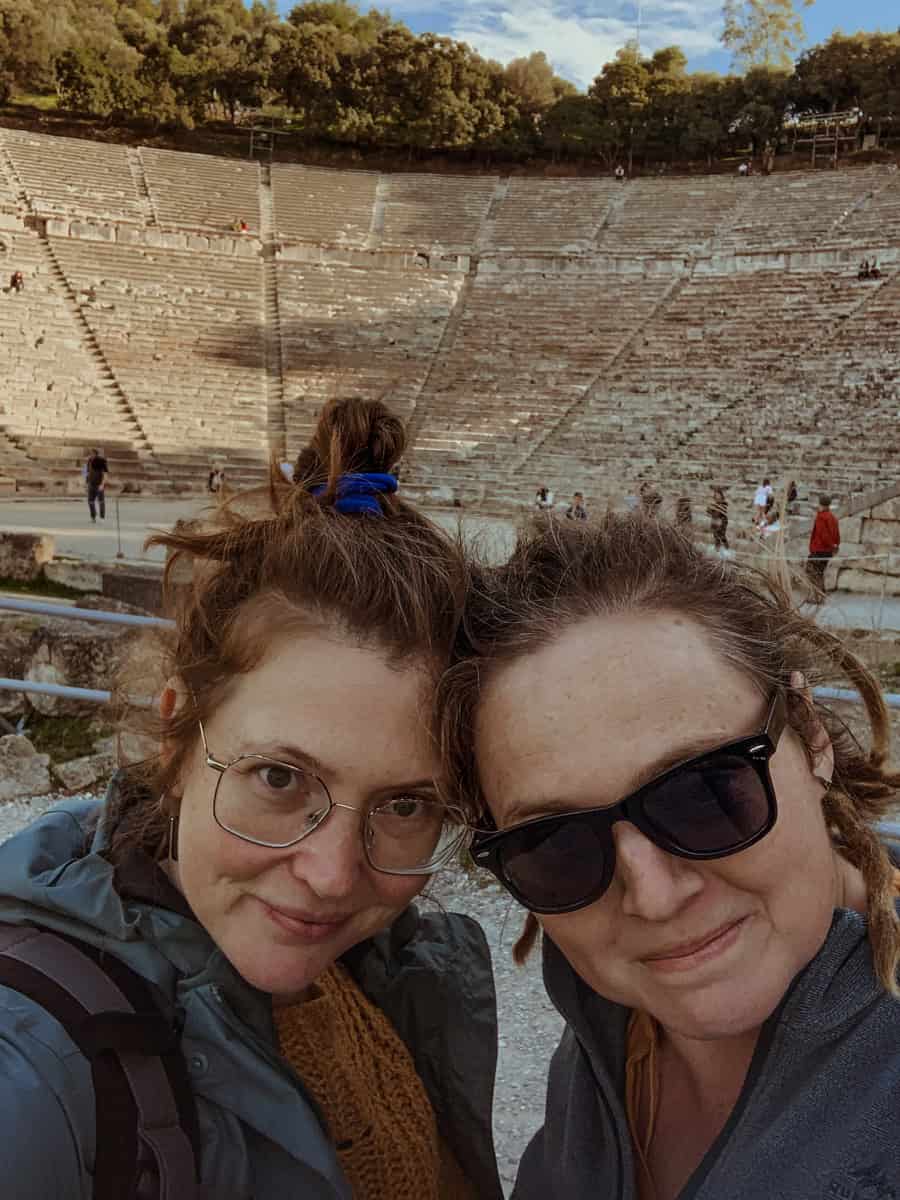
Walking Through the Site
The layout of Epidaurus isn’t overly complicated. There are defined paths leading through the site, and it’s easy to figure out where to go without always checking maps or signs.
From the parking lot, you walk a couple of meters towards the main pathway (this is where you get dropped off by the tour bus). I believe there should be some shops in high season, but during our visit, they were closed.
Follow that wide concrete path for a couple of minutes. It will bring you to the main entrance which is a wooden building where you can buy your tickets. A bit further, you’ll have to show your ticket and officially enter the Epidaurus site.
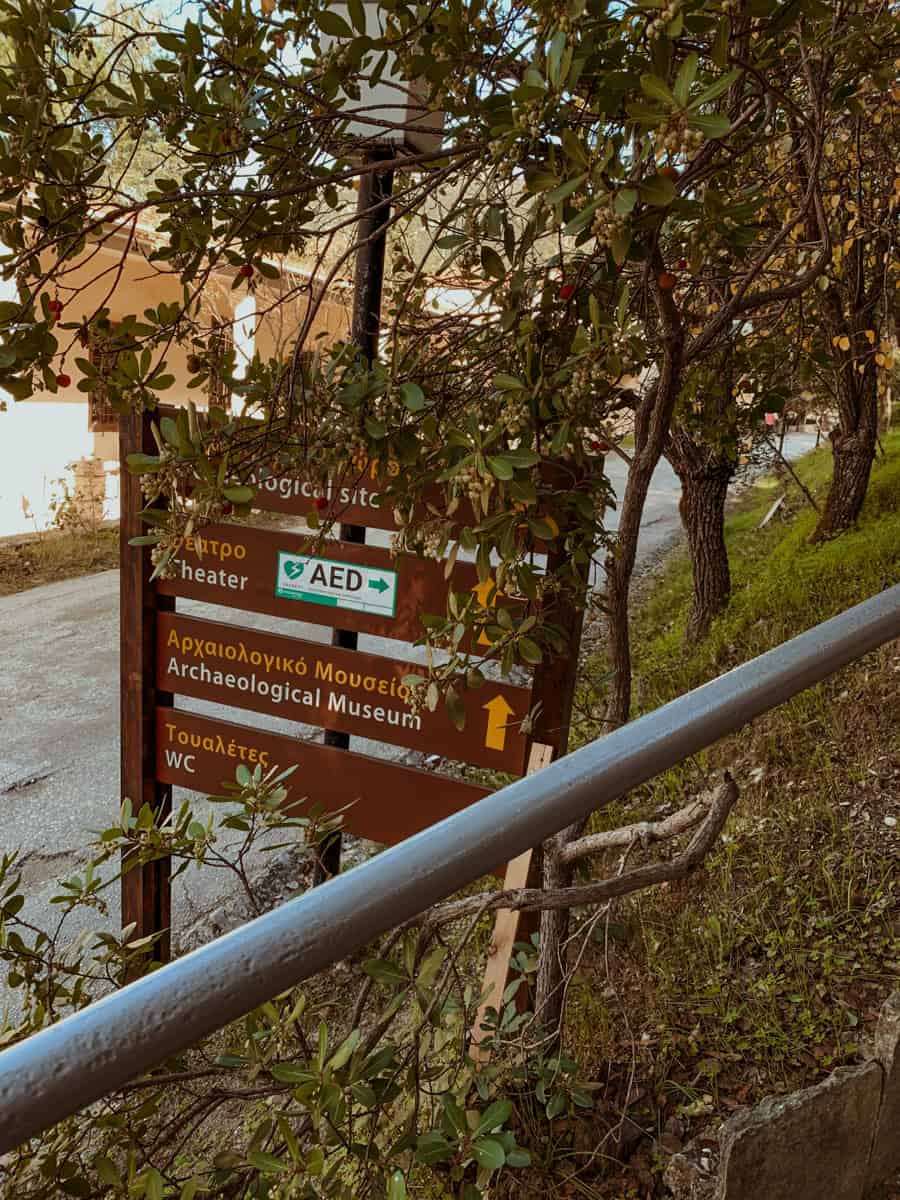
After that, follow the path again. You’ll see some stairs near the right which you can take as a shortcut to get to the theatre. If you don’t, you’ll come across the museum on your left-hand side and then turn right to find the theatre.
Once you’re done exploring the theatre, you can turn back to visit the museum or make a stop at the toilets in a small building across the museum. Or take the path on the left side of the theatre (when watching it) and explore more of the site. We didn’t do this, though, so I can’t tell you where it leads.
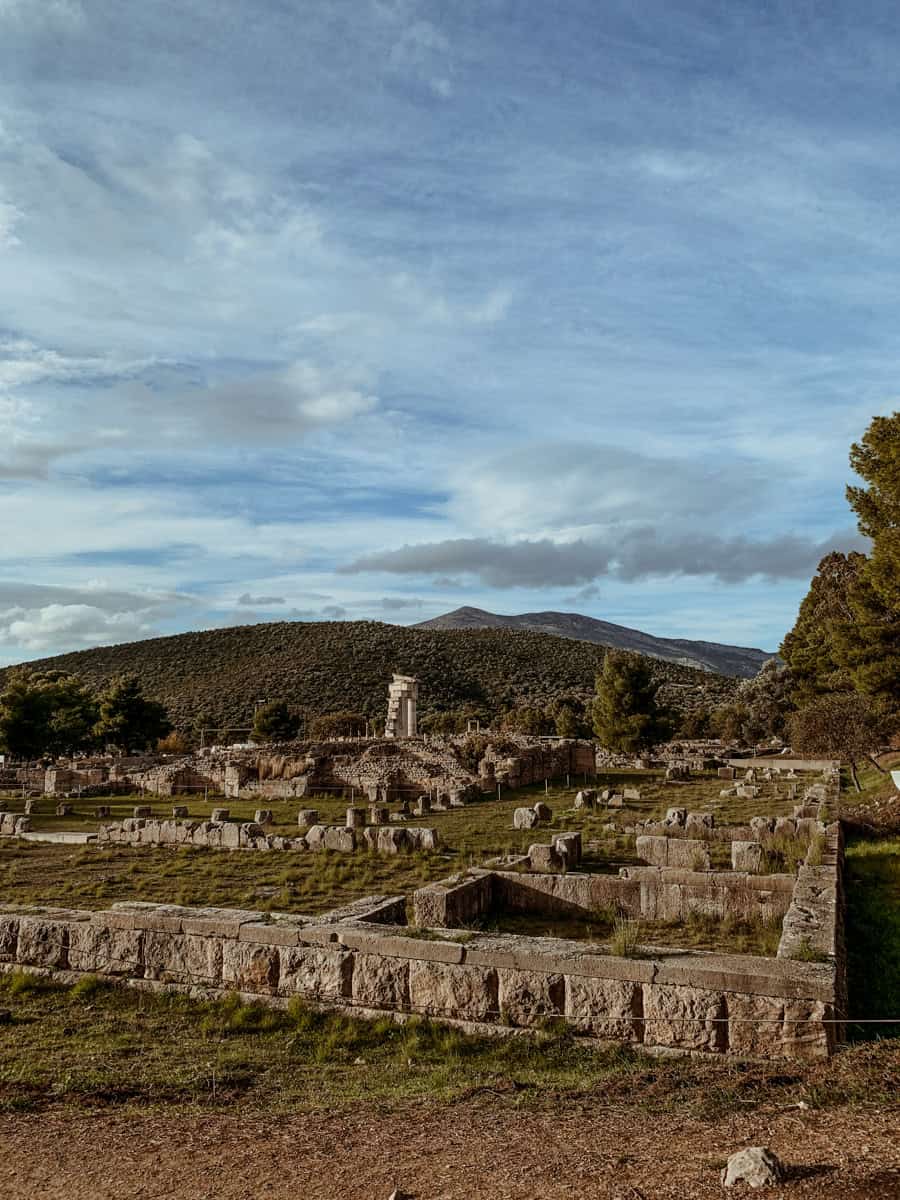
After the museum & toilets, you’ll find a smaller path on the right, that leads to a different part of the sanctuary (including the beautiful ruins you could see from the parking lot). From there, track back and follow the main path back to the entrance.
This was the route we covered, but the site is much larger so could spend a lot more time exploring if that’s something you want.
The terrain is a mix of compacted earth, gravel, and stone. In some areas it’s smooth and easy, in others you’ll come across uneven patches or worn stone surfaces. It’s not difficult walking, but it’s not perfectly even either.
Things you’ll notice as you move through the site:
- Clear walking paths connecting the main areas
- Some stairs and inclines near the theatre
- Open exposure to sun in some sections
- Limited shade in the main archaeological zones but more in the paths
- Toilets near the entrance area (basic but available) and near the museum
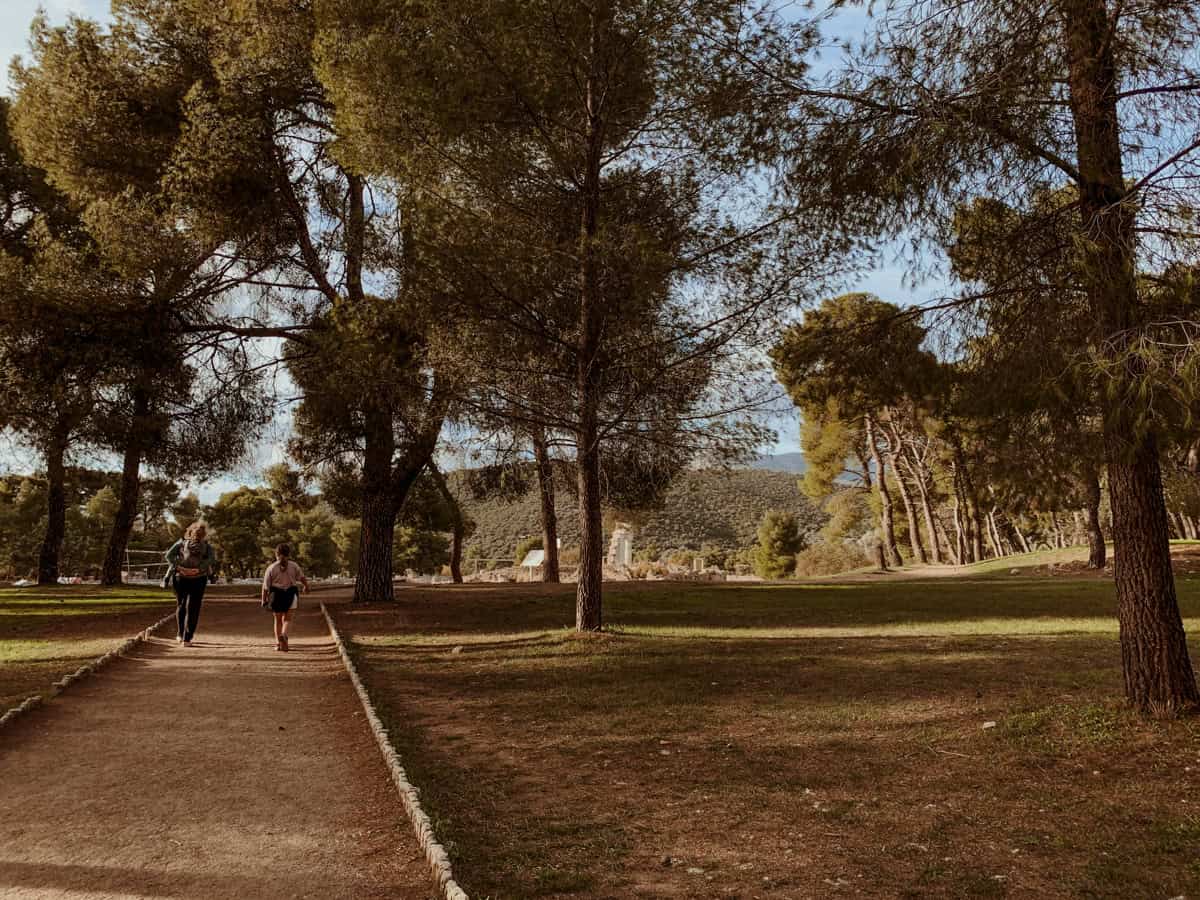
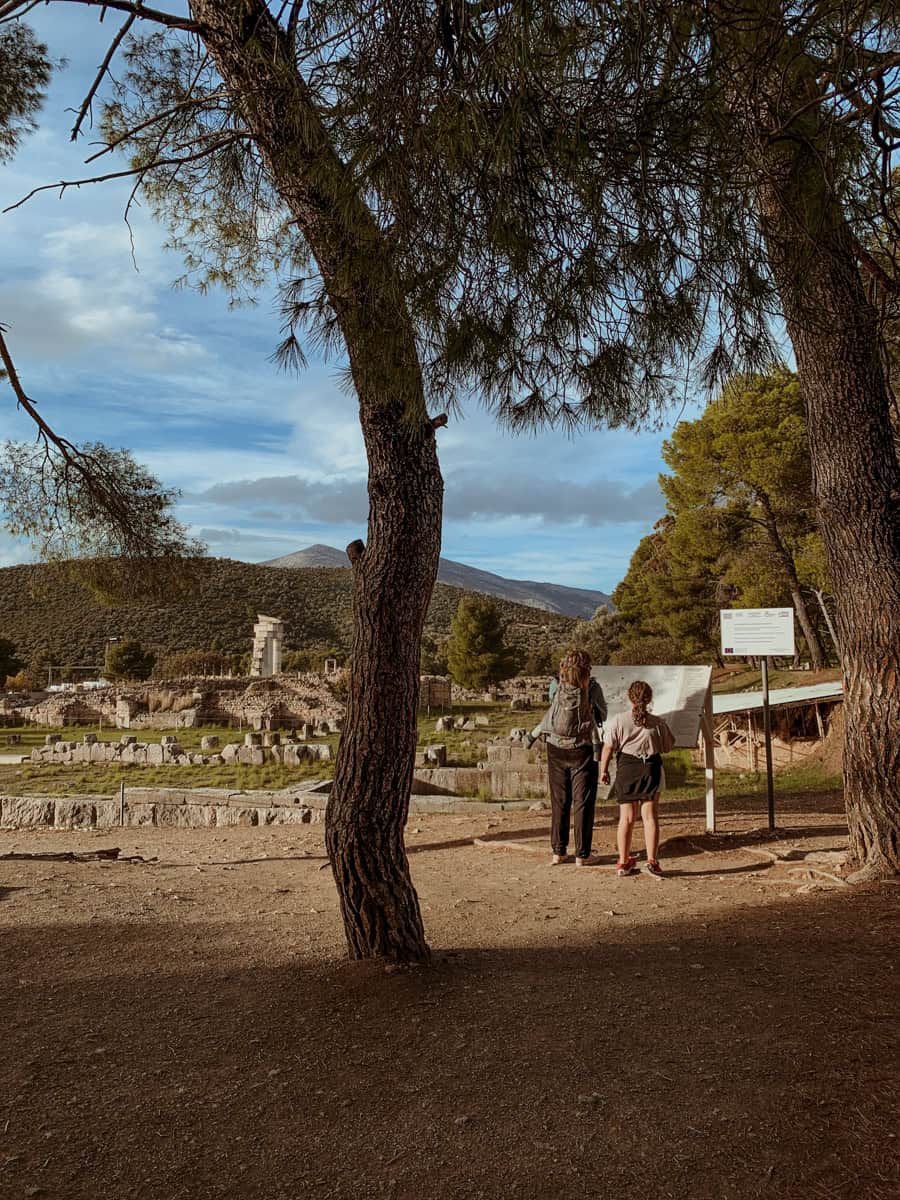
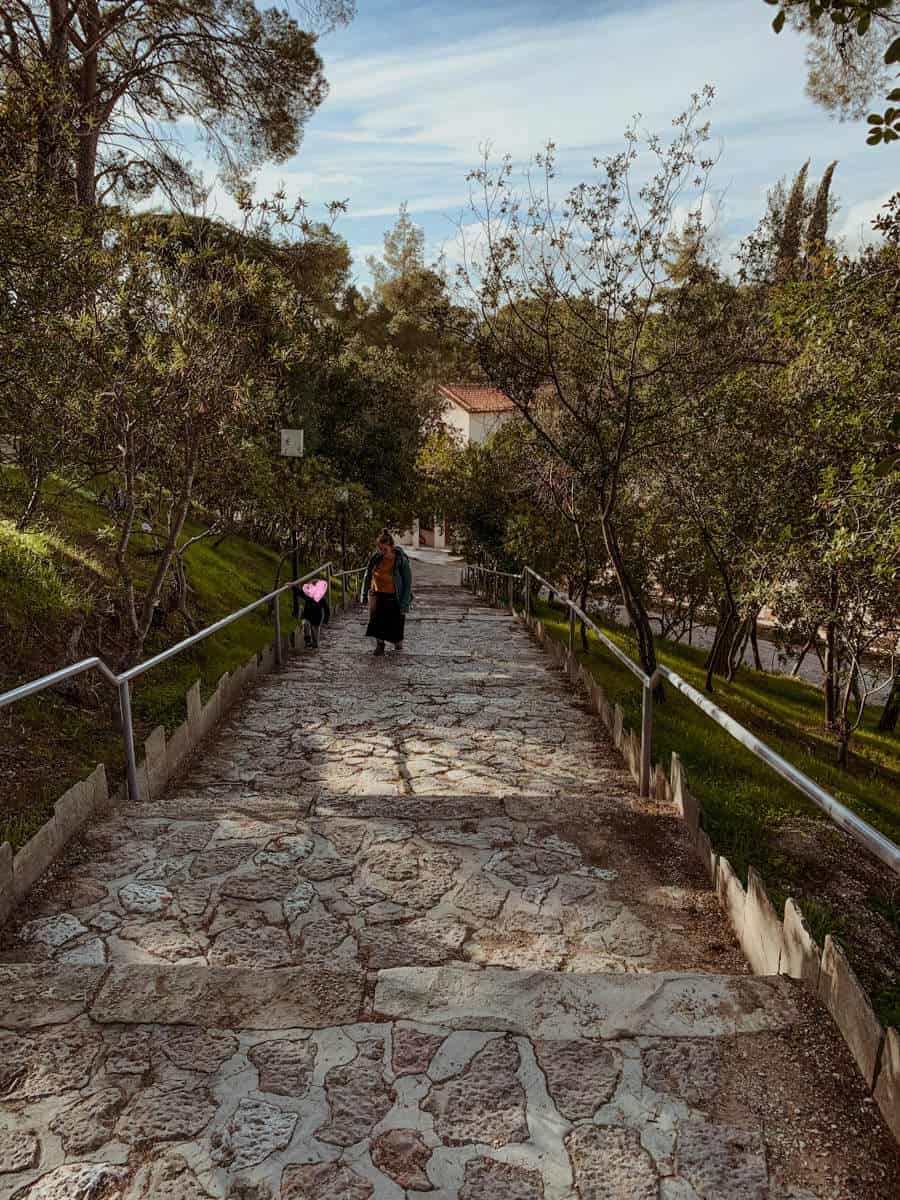
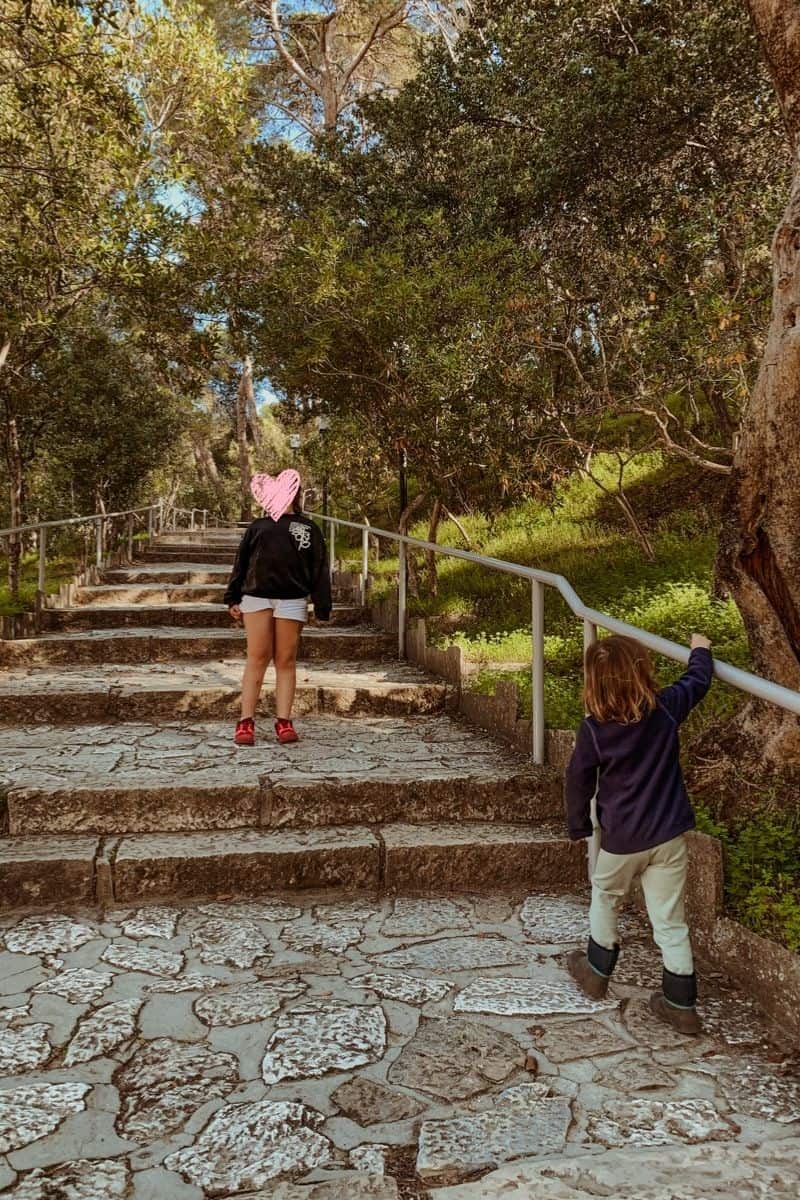
In summer, the heat can become quite strong in the theatre itself because there isn’t much cover. In spring or autumn, it feels much more comfortable for wandering around and sitting down on the steps.
For kids, the huge space is actually one of the biggest advantages. They can move more freely than in crowded monument sites, and there’s less pressure to stay in tight groups or follow narrow walkways. That said, the uneven stones mean it’s still a place where you’ll want to keep an eye on footing, especially for younger children.
The Theatre Itself
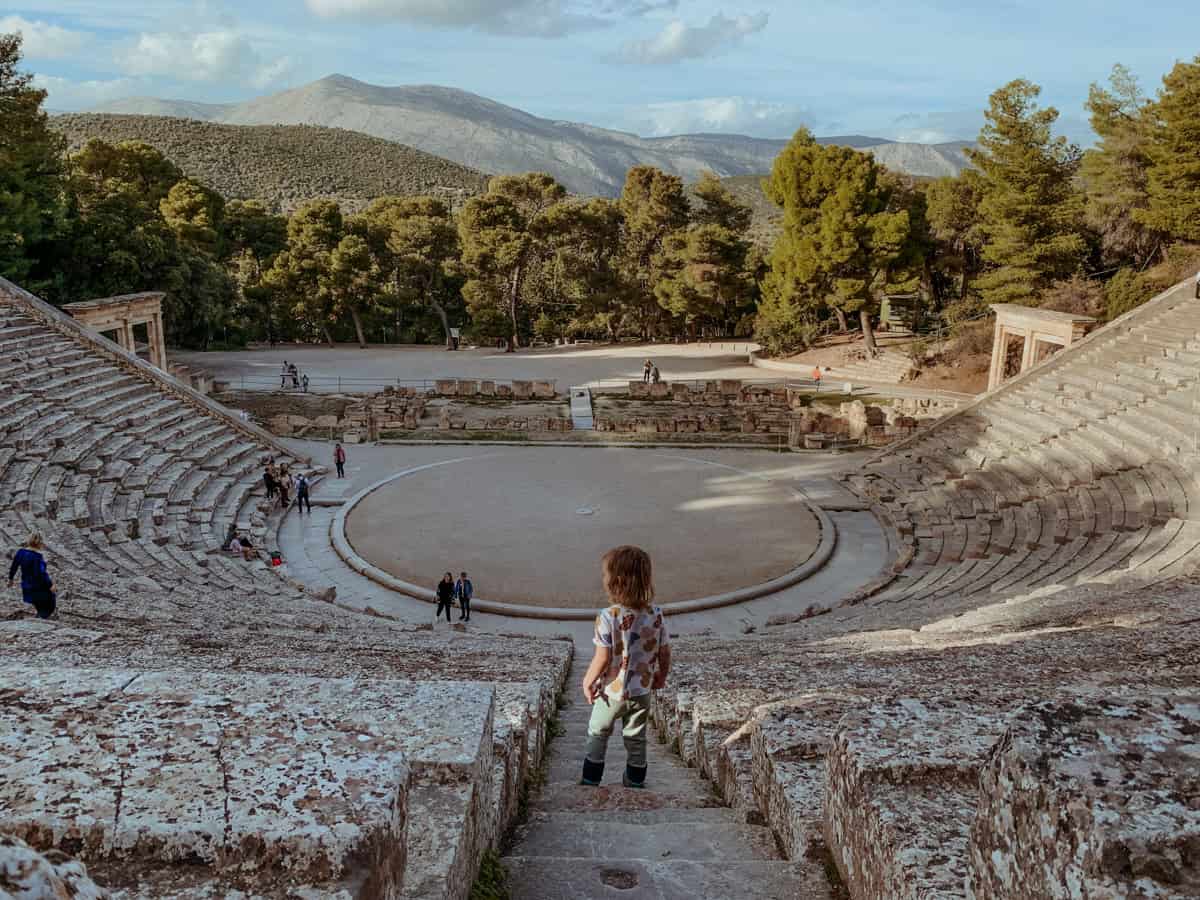
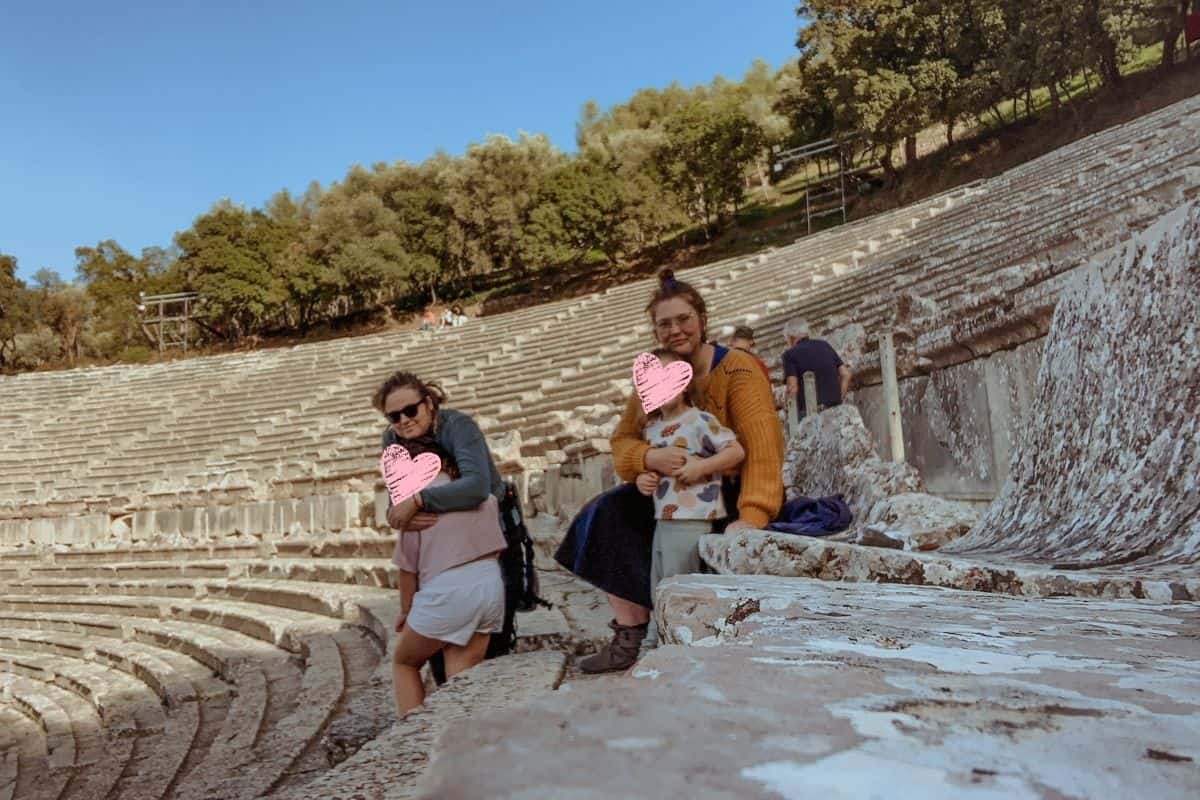
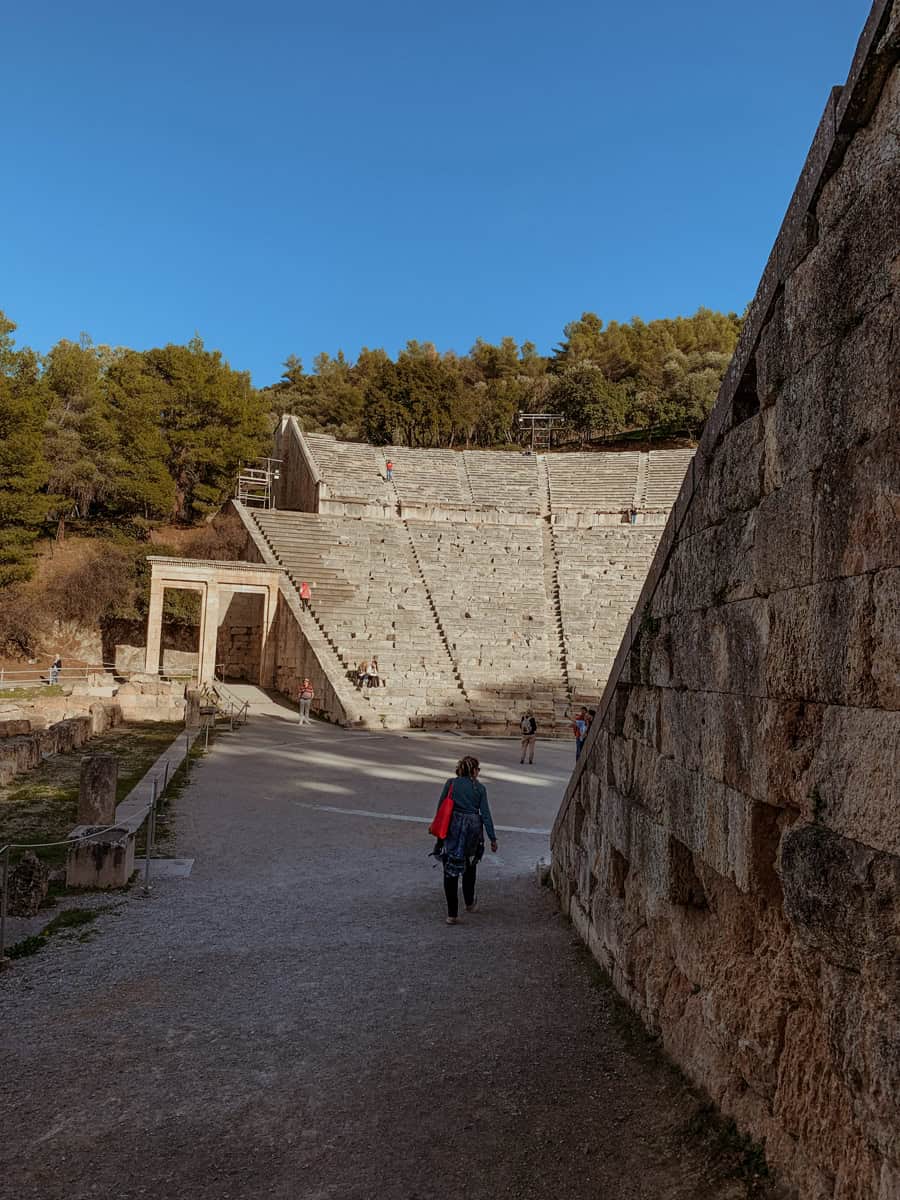
The theatre is the main reason most people come here. It’s large, almost perfectly preserved, and built into the hillside in a way that makes it very accessible. You can stand at the bottom and see the entire seating structure rising above you.
Key features:
- Massive semi-circular seating area carved into the hill
- Excellent visibility from almost every angle
- Acoustic demonstrations often done by visitors
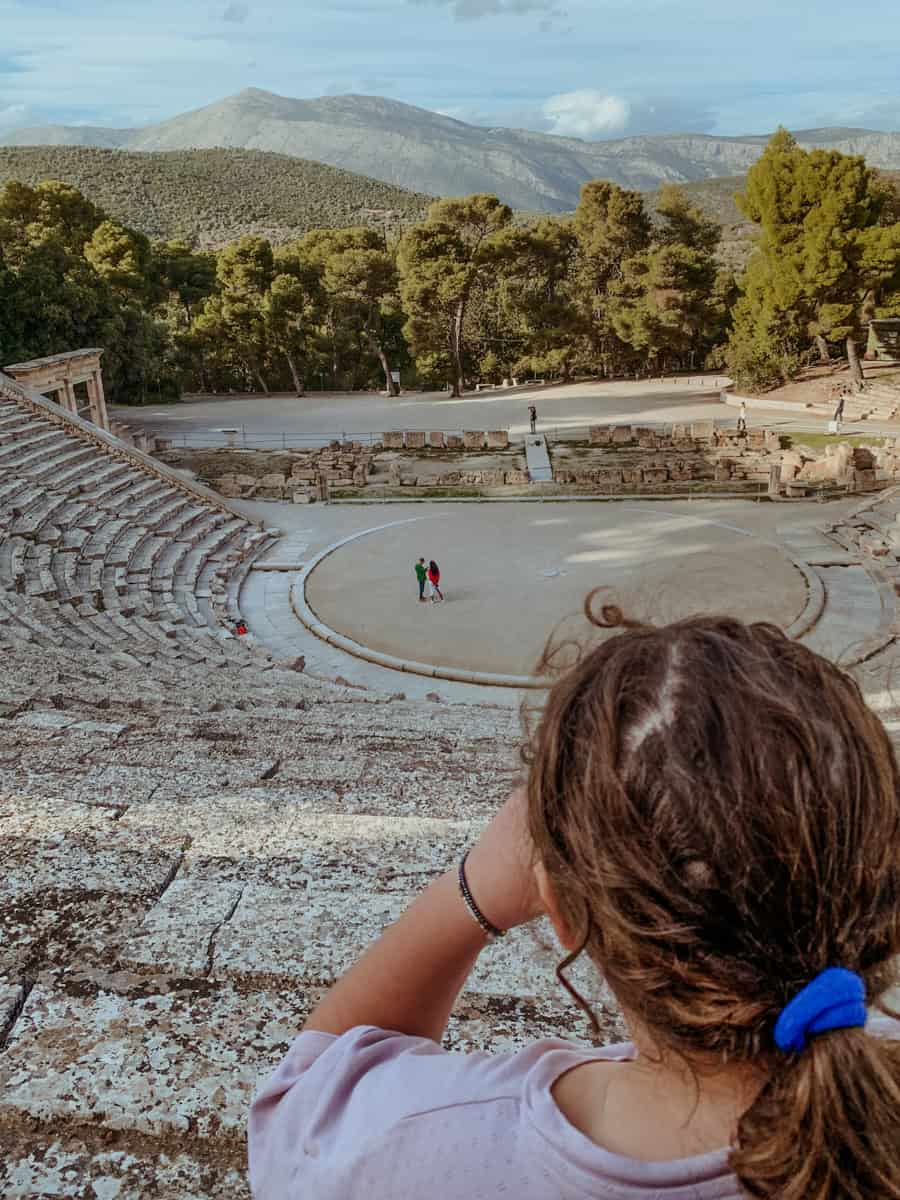
- Stunning views over the surrounding mountains from the upper rows
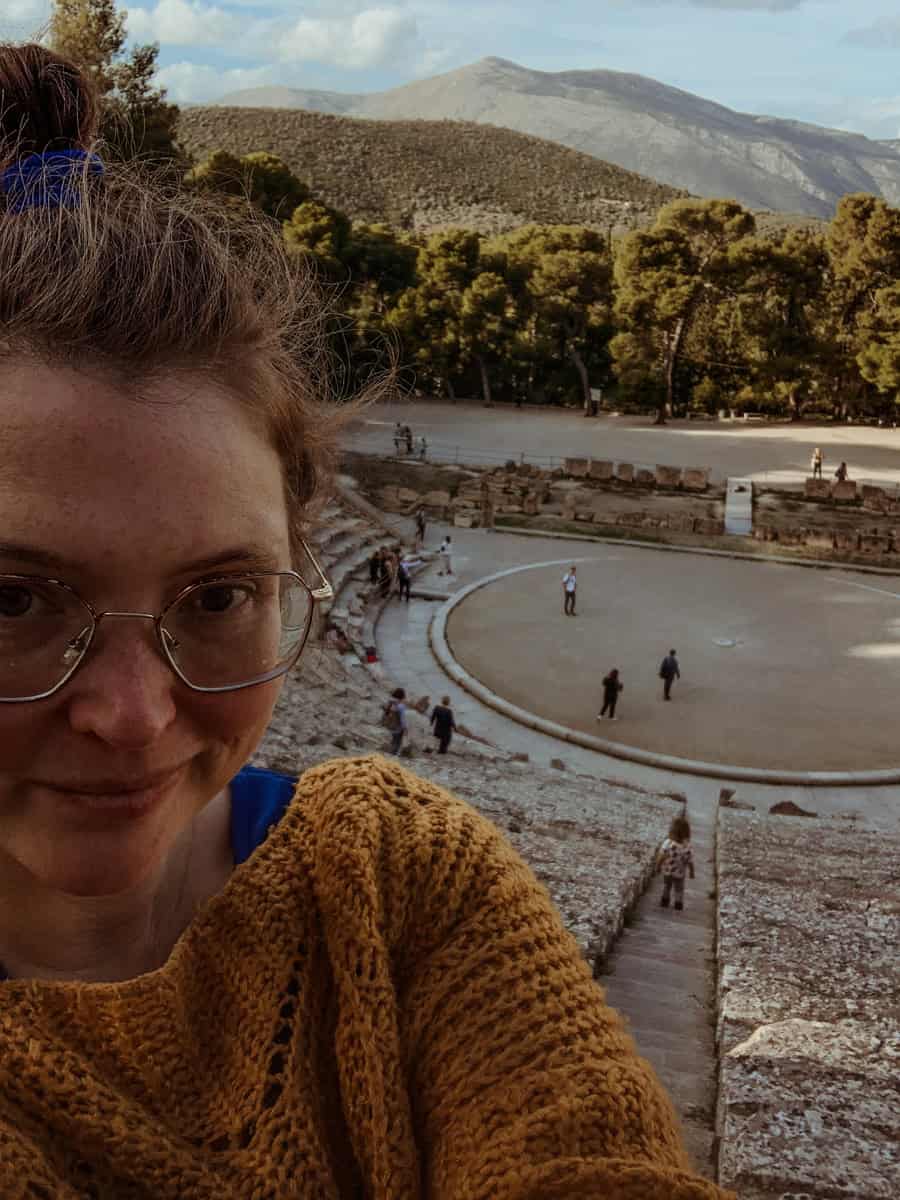
Climbing up the seating area is usually part of the experience. Whether it’s “worth it” depends a bit on energy levels. The higher you go, the better the view – but it does involve uneven stone steps that can feel a bit tiring. I love, love, love views over the mountains, so I sat here for a while just staring and taking everything in. And if you think it looks good on this picture below, wait until you see it in real life.

A few practical notes:
- The limestone is very bright and reflective in strong sun
- Some surfaces can feel slightly smooth or worn underfoot
- Noise levels depend on how many groups are doing acoustic tests at the same time
- Earlier in the day usually feels quieter and more relaxed
Please note that the Greek guards have very clear rules about what is and isn’t allowed. Kids are not allowed to remove their shoes. Be warned if you have little ones who prefer to walk barefoot like our youngest. Also running (not crazy running like kids are prone to do, but even a gentle jog) is not appreciated either (we didn’t get a comment here in Epidaurus, but we did at the (bottom of) the Acropolis).
The museum
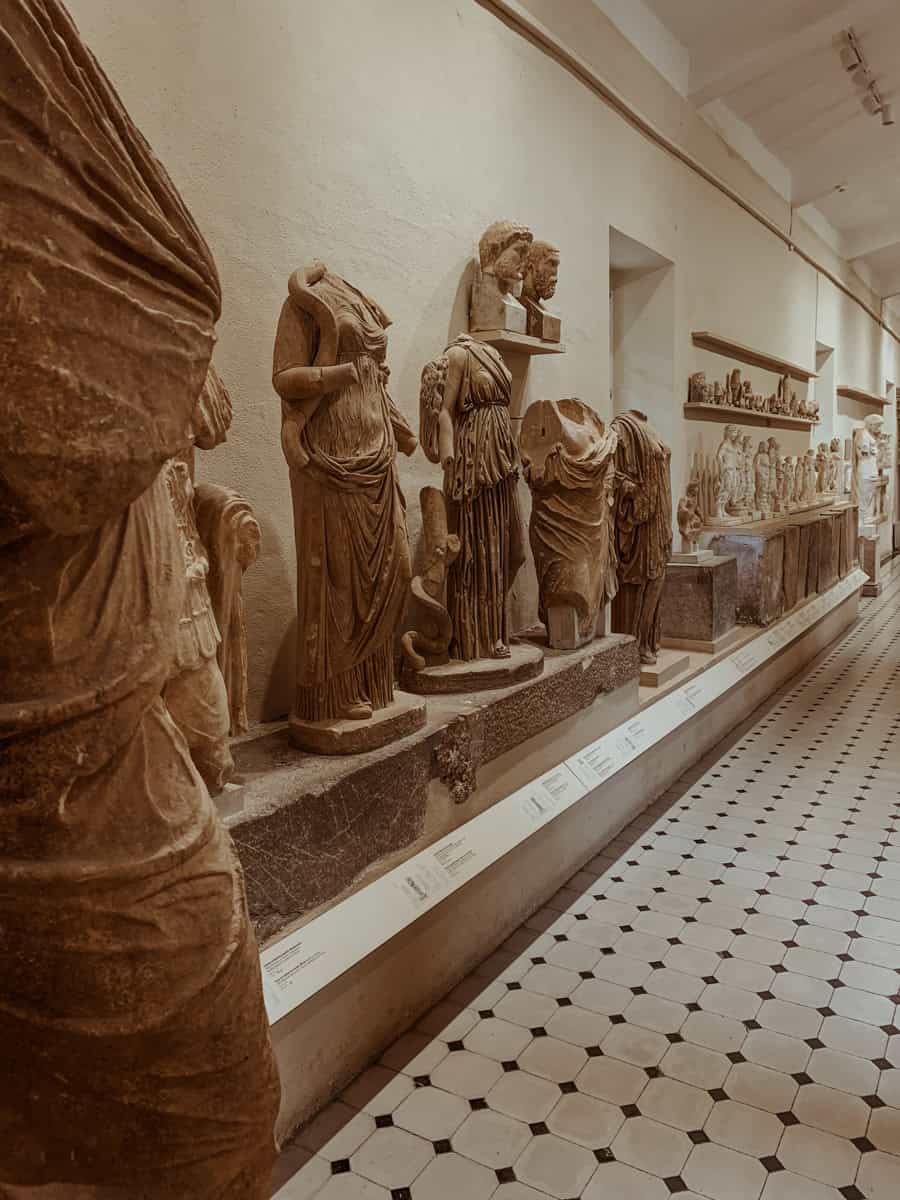
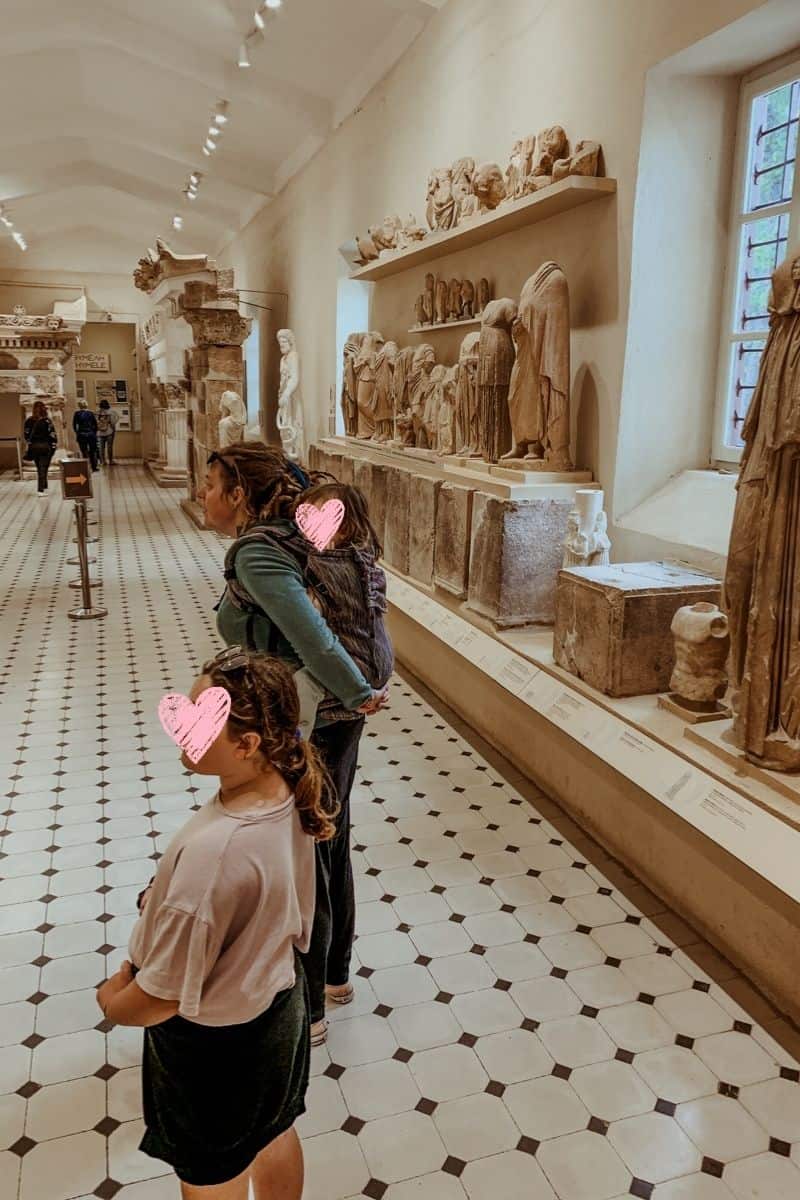
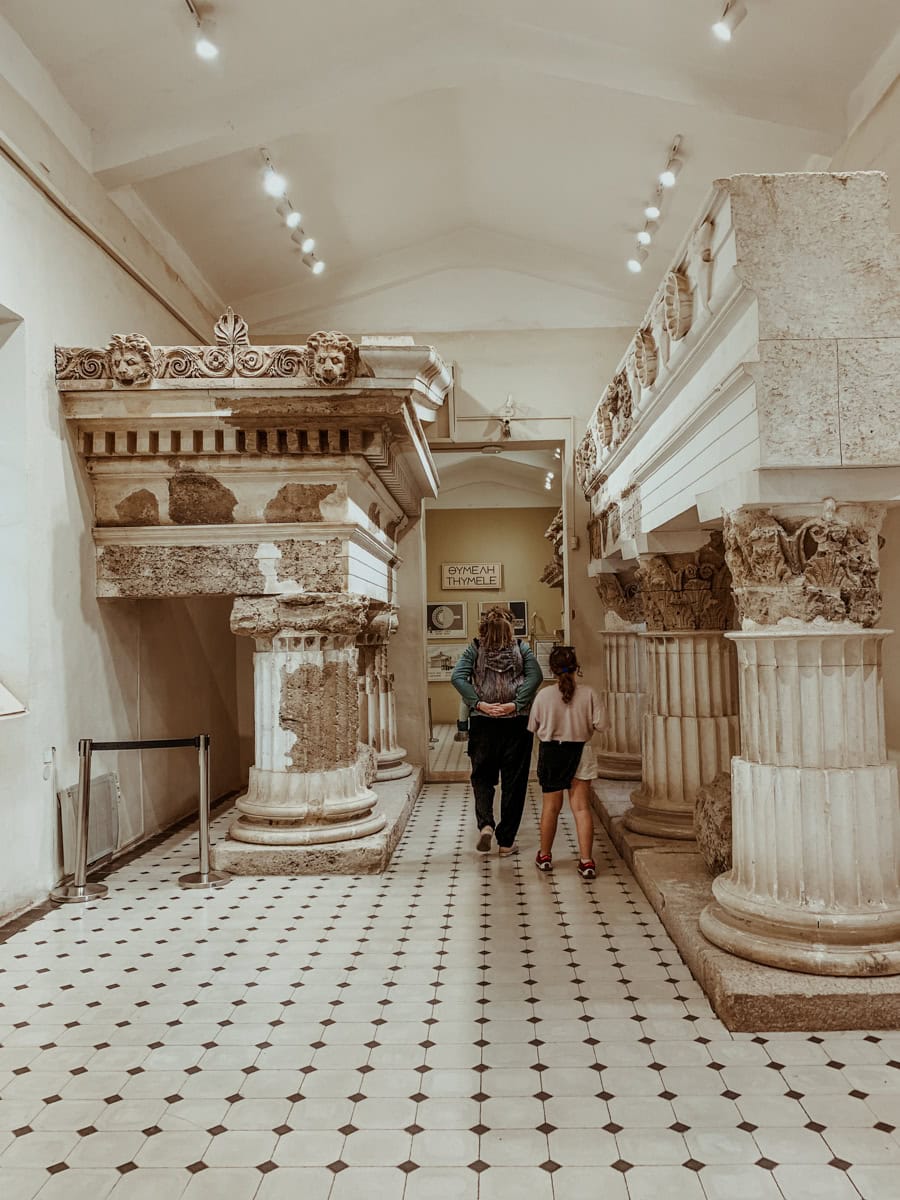
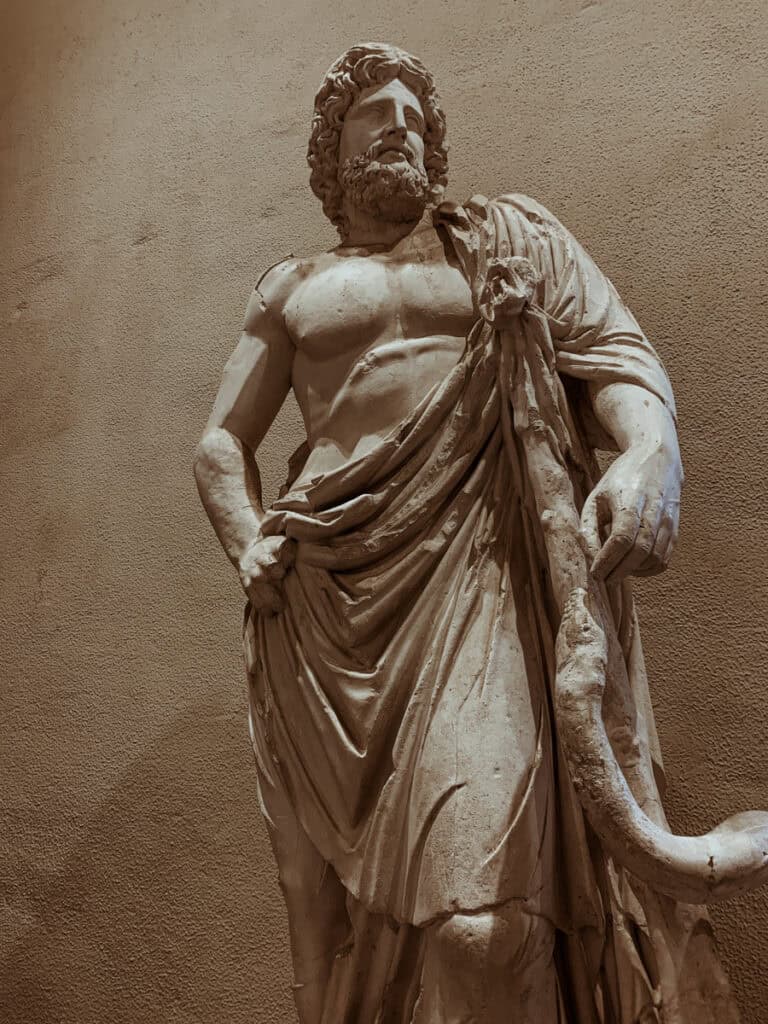
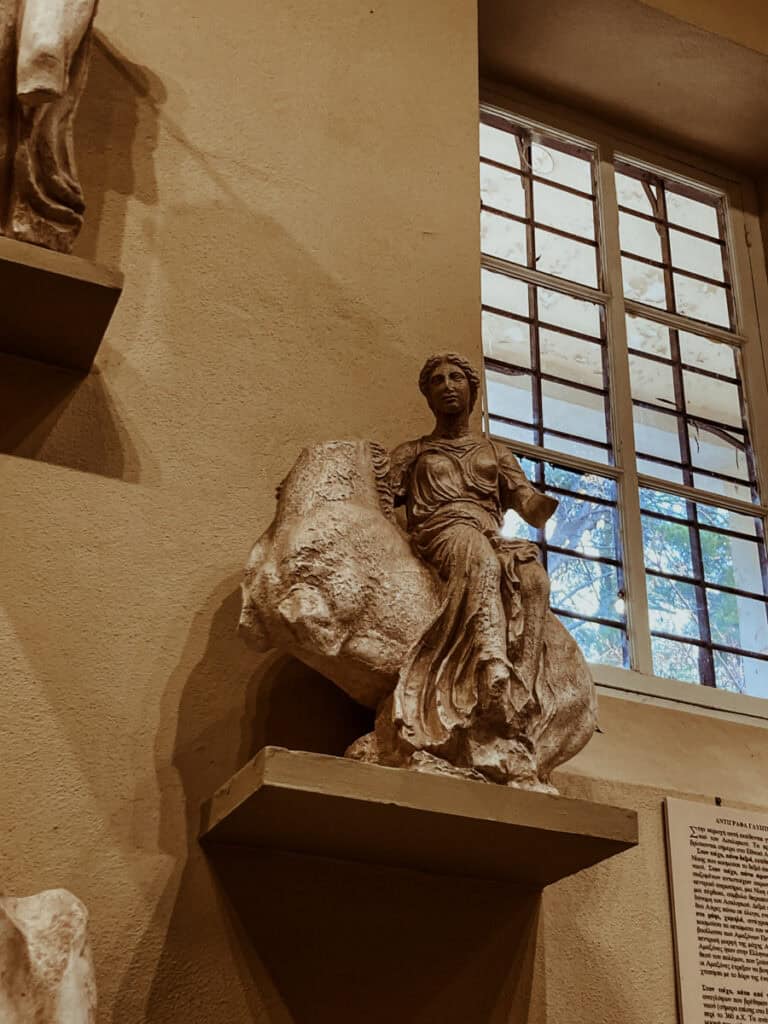
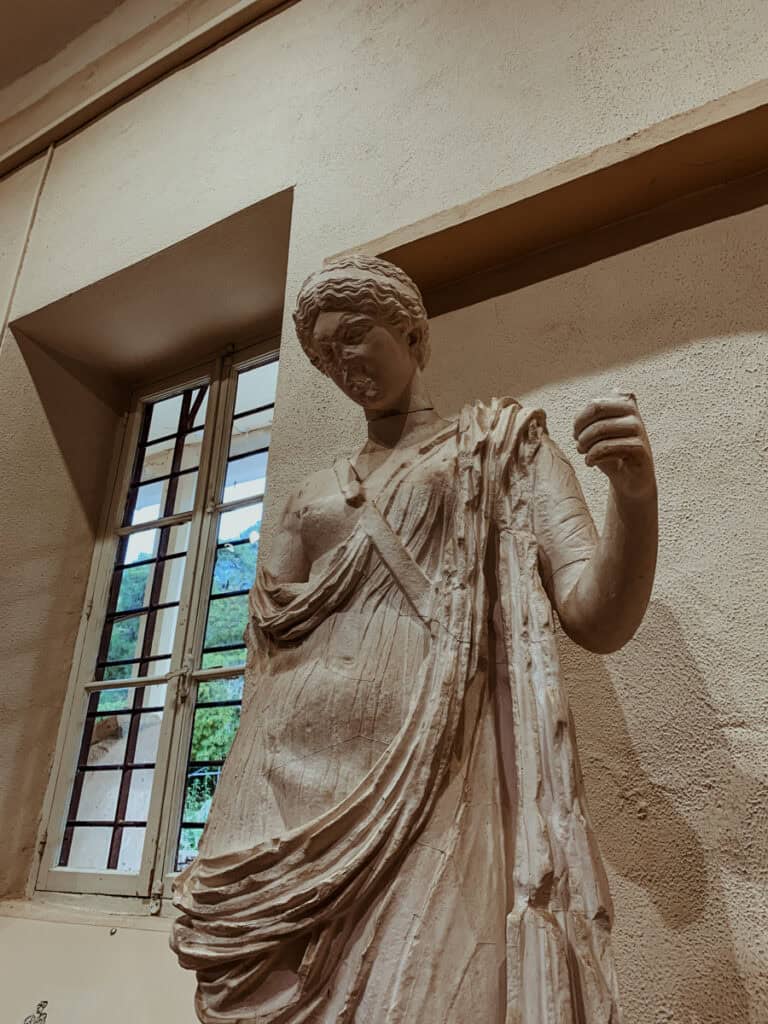
There is also a small museum nearby with sculptures, inscriptions, and objects found on site.
The museum is small and takes maybe 15 minutes at a relaxed pace. It houses sculptures, inscriptions, and objects found on site, including some beautifully preserved statues that give you a sense of what the sanctuary once looked like. It’s indoors, so it brings some relief from the sun in the summer heat, but (as far as I could see), there’s no air conditioning.
It’s worth a quick walk through, but if your kids are running low on energy, you might prefer to skip it.
The other ruins at the sanctuary
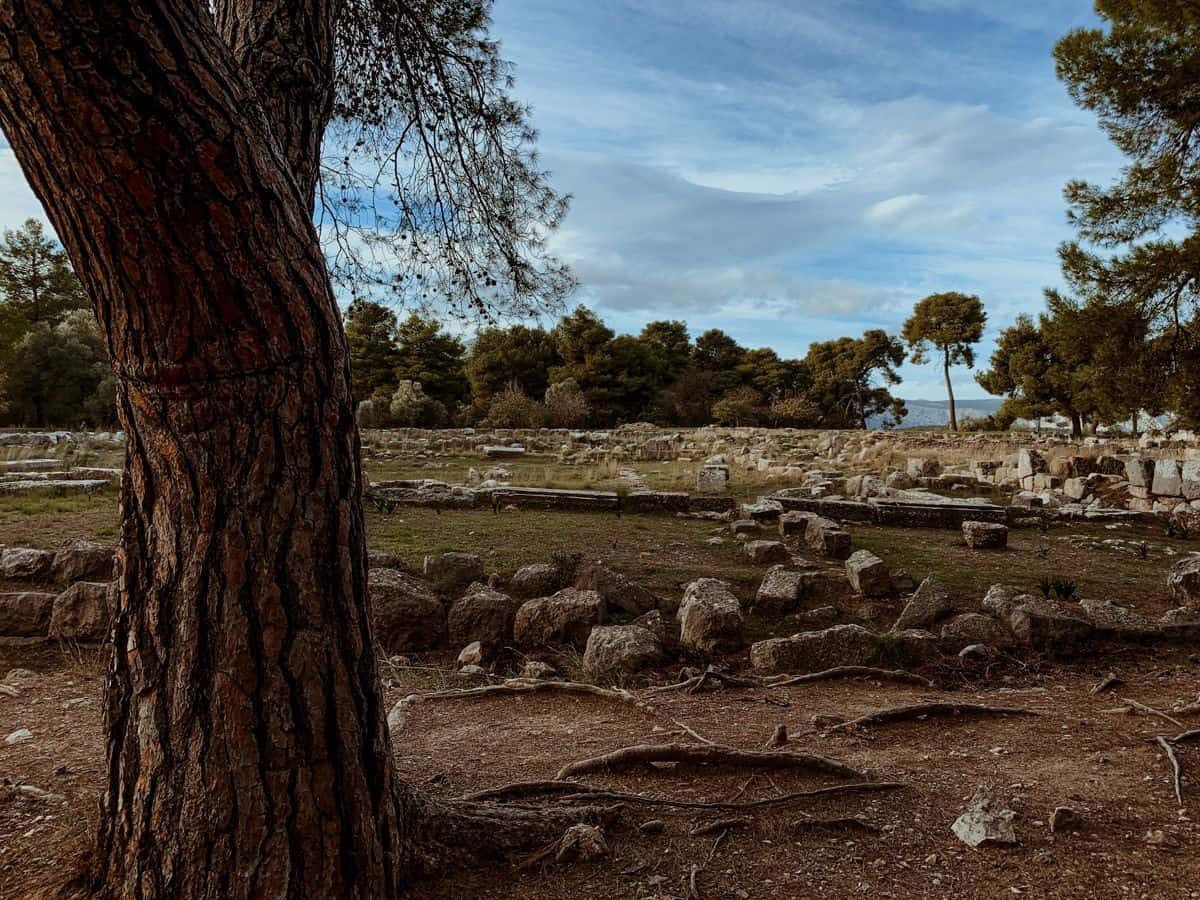
If you have the energy after the theatre, it’s worth taking the path that leads further into the sanctuary area. It’s a short walk and gives you a broader sense of the scale of what this place once was. At its peak, Epidaurus wasn’t just a theatre: it was a full healing complex with temples, baths, a hostel, a stadium, and ritual buildings spread across the site. Walking through the wider area helps you feel that, even if most of what remains are low stone foundations.
That said, the ruins here are more scattered and require considerably more imagination than the theatre. You’re mostly looking at outlines in the ground rather than standing structures.
A few things are worth pausing at if you have curious kids: the remains of the Tholos, a circular building that was once considered one of the most beautiful structures in ancient Greece, the foundations of the Temple of Asclepius at the centre of the sanctuary, and the large rectangular outline of the Katagogion, a hostel that once had 160 rooms for patients and pilgrims. The stadium is also still visible, tucked into a natural depression in the landscape.
If your kids are done after the theatre though, don’t feel obligated to push further. The wider sanctuary is genuinely interesting for adults who want a bit more context, but it doesn’t add a lot visually and younger children are unlikely to find it as engaging as the theatre itself. It’s completely fine to call it a day and head to the beach for some well-deserved playtime.
Practical Information for Visiting Epidaurus
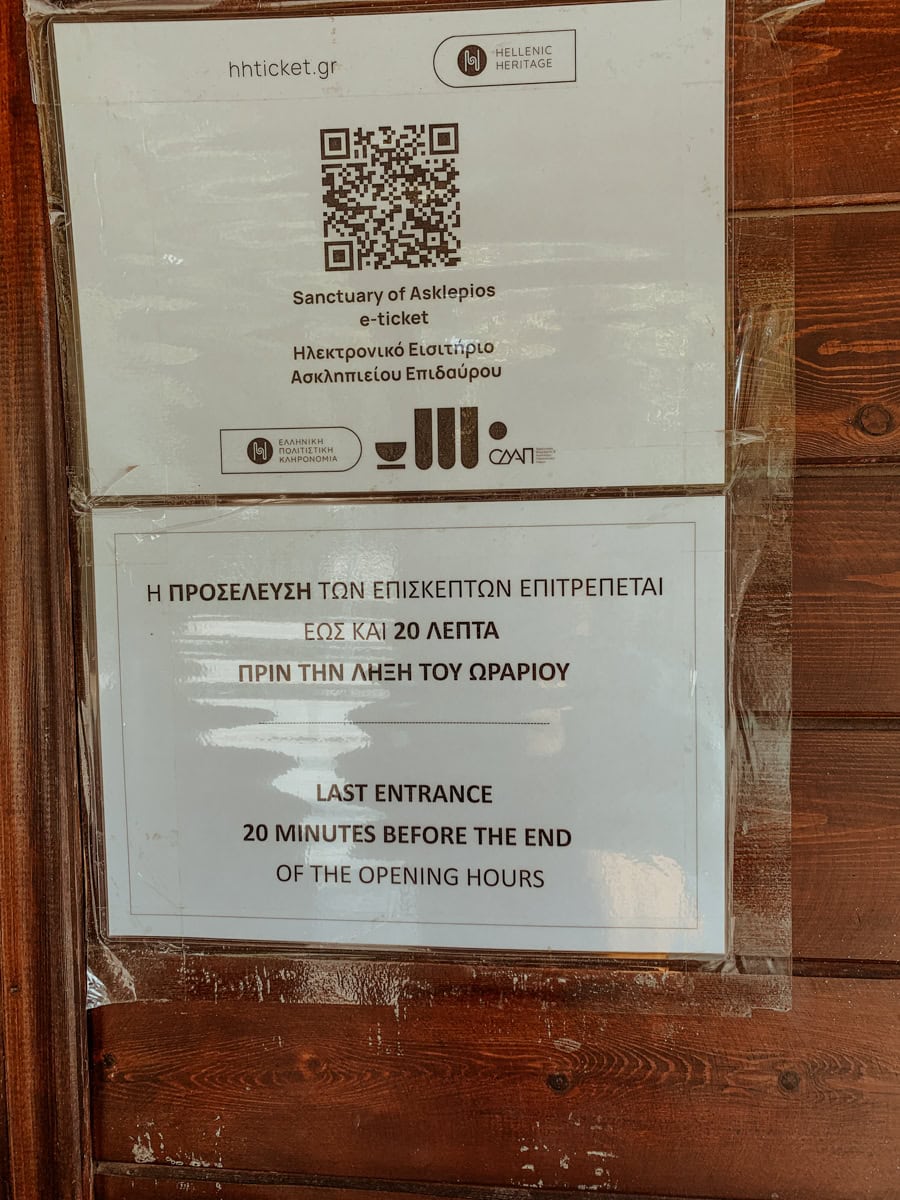
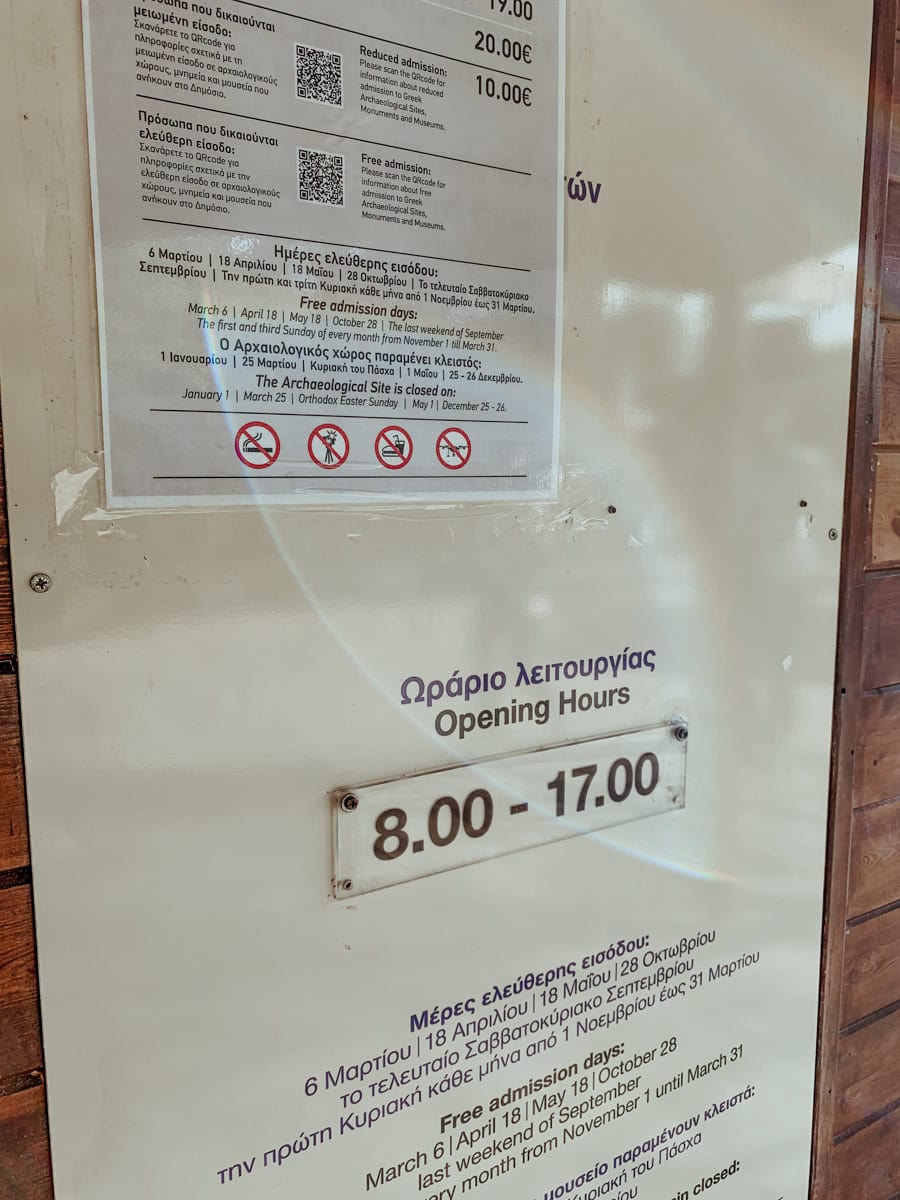
💰 Entrance Fee: The ticket is priced at €20 for full admission, which includes access to the theatre, archaeological site, and museum of the Asklepieion of Epidaurus. They are sold on-site or can be purchased online to skip long queues, though prices and policies may change, so it’s best to check the official website before your visit.
There is also Free admission on selected cultural holidays and on the first Sunday of each month from November to March.
Festival tickets must be purchased separately via the official Athens & Epidaurus Festival website or authorised vendors.
🕰️ Opening Hours: Seasonal opening hours follow daylight conditions, with longer hours in summer (08:00–20:00) and shorter hours in winter (08:00–17:00). Always check current opening times before visiting, especially during the shoulder season.
☀️ Best Time to Visit: Spring and autumn are the most comfortable. In summer, early morning is best to avoid heat and tour groups. Midday tends to be the busiest and hottest. Please note that archaeological sites and museums are closed on January 1, March 25, Easter Sunday, May 1, and December 25–26, and most museums and collections are also closed on Tuesdays.
♿ Accessibility: Some flat paths are available near the entrance, but much of the site is uneven. The theatre has steep stone seating and can be challenging for visitors with limited mobility. However, the surrounding sanctuary grounds are more accessible, with most monuments reached via designated visitor routes.
🚻 Facilities: You can find toilets at the entrance and across the museum. There are no reliable food options on site. Bring your own water and snacks, especially in summer when the heat on the open parts of the site can be quite intense. There are a couple of restaurants in the surrounding villages (including the promising Restaurant Panorama) if you need something before or after, but don’t count on finding anything at the site itself. And in contrast with the other monuments, we didn’t come across a souvenir shop here.
Combining Epidaurus With Other Stops
I recommend visiting Epidaurus as part of a wider Peloponnese route rather than a standalone destination. The surrounding area has enough variety that it’s easy to build a relaxed and balanced day or even a short road trip around it.
Nafplio
Nafplio is the most common base for visiting Epidaurus. It’s a small coastal town with a relaxed feel, good restaurants, and enough going on without being overwhelming. You can explore the old town, stop for ice cream, or just take things slowly between excursions. It also makes driving to Epidaurus simple and unhurried.
Mycenae
Mycenae is a very different experience. It’s more exposed, more rugged, and involves a bit more climbing and uneven terrain. If Epidaurus feels open and structured, Mycenae is more adventurous and scattered. The contrast actually works well if you’re visiting both in the same trip. (TIP: around Mycenae, you’ll find lots and lots of mandarin trees and even a couple of roadside “shops” that sell bags of 5 kilos. Very tasty!)
Corinth Canal
If you’re coming from Athens, the Corinth Canal is an easy stop along the way. It’s quick, very accessible from the road, and doesn’t require much time. Most people stop for a short look, take a few photos, and continue on.

Beaches Near Epidaurus
There are several beaches along the coastline near Epidaurus and Nafplio, which can be an easy way to break up a sightseeing day. Adding a swim stop after the archaeological site works well with kids, especially in warmer months. It also balances out the “walking and exploring” part of the day with something more relaxed.
Seeing a Performance at Epidaurus
In summer, Epidaurus becomes a completely different kind of place when performances are held in the ancient theatre as part of the Epidaurus Festival. The theatre is still used today for classical drama, and seeing a performance here can easily become a highlight of your Greece trip.
The atmosphere is very different from a daytime visit. The setting is dramatic, the seating is full, and the focus shifts from exploration to performance. It can be a memorable experience, but it’s not always an easy one for younger children. The shows are long, the seating is stone, and the evenings can run late depending on the programme.
If you’re considering it, make sure to book ahead. Performances often sell out, especially for well-known productions.
Is it worth visiting Epidaurus with kids?
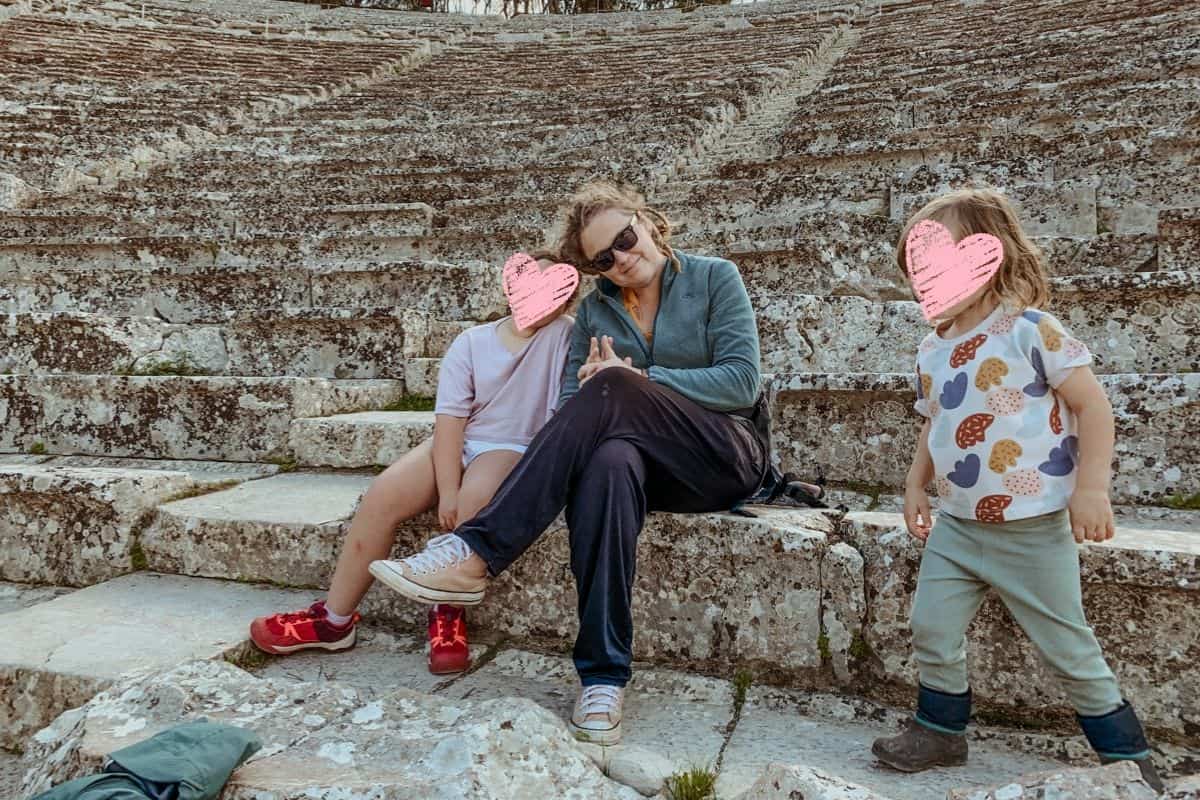
Kath and I were really excited about Epidaurus. We love archaeological sites and this one had been on our list for a while. What we didn’t expect was that the kids would love it too, because they’re usually not our biggest archaeology fans (and we have to bribe them with beach time afterwards). But they definitely enjoyed it too.
We were also struck by how green everything was. At places like the Acropolis or Knossos you’re completely exposed, with the sun bouncing off the stone everywhere you look. Epidaurus feels nothing like that. There are trees, there’s shade, and it just feels calm. We went in spring and we tried to catch the sun whenever possible. But I can imagine that in summer, the shade makes a huge difference in how you and the kids experience this visit.
If you love archaeological sites (and even if your kids don’t), I’m pretty sure you’re going to enjoy this one.